Get Full Government Meeting Transcripts, Videos, & Alerts Forever!
Get email alerts on the Infrastructure topic
No spam. Unsubscribe anytime.
Newcastle to pursue community partnership for emergency power and fund battery backups
Summary
The council directed staff to pursue a partnership for emergency backup power rather than immediately buying a large generator, and approved up to $40,000 to bolster battery backup that would maintain servers and connectivity for City Hall and the public-works annex.
City Manager Pingel presented three options for emergency backup power: a small permanent generator (estimated just under $600,000), a trailer-mounted portable generator (about $400,000) and an alternative strategy to partner with another community facility whose infrastructure could host backup power.
Pingel said staff recommends, at minimum, spending roughly $40,000 (including sales tax) to bolster battery backup for servers and communications equipment; that upgrade would sustain critical connectivity for around four days to allow staff to work and maintain communication with residents.
Council members debated goals for a backup-power investment, separating two objectives: (1) ensuring safety, health and comfort for residents during prolonged outages and (2) enabling staff to maintain operations and public communications. Some members argued City Hall lacks facilities (showers, food prep, space) to shelter residents during an extended outage and favored partnerships with community facilities such as the YMCA or school district buildings. Others supported a portable trailer solution for flexibility during events and field operations.
Director Malcolm clarified technical points: the $40,000 battery option would sustain servers and connectivity only (not power the meeting room or the whole building); a 60-kilowatt generator was suggested for the building's load in earlier costing work. He said portable units can be moved by public-works equipment but stressed that distribution panels and transfer switches must be installed at any receiving facility for the generator to be usable there.
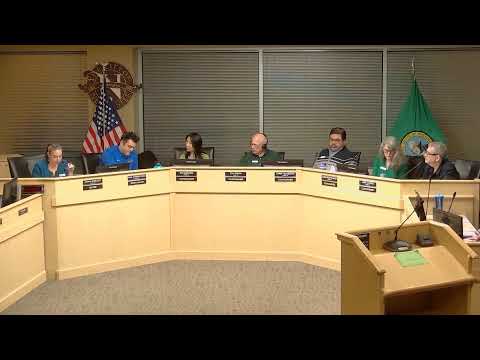
Council member Frost Blakely moved to "direct the city manager to pursue a partnership for emergency backup power with another community facility and to approve spending up to $40,000 to enhance battery backup systems to provide uninterrupted connectivity at City Hall, the Public Works Annex, and remote users." Council member Burford seconded. The motion carried 7-0.
The council asked staff to return with partnership options, comparative costs for renting versus purchasing portable generators, and any site improvements required to connect a generator to city buildings.