Senate panel hears industry case that data centers bring jobs and tax base, warns against restrictive bills
Loading...
Summary
Industry witnesses told the Senate Judiciary Committee that data centers deliver capital investment, skilled construction employment and downstream suppliers, while urging careful, targeted regulation so South Carolina does not lose competitive bids to neighboring states.
Clark Gillespie, a consultant for DC Blocks and former president of Duke Energy for South Carolina, and Alicia Treanor, Metas public policy manager for infrastructure and energy, told the Senate Judiciary Committee that data centers are driving multi-billion-dollar investment and local jobs while raising questions about power, water and siting.
Gillespie told the committee that DC Blocks operates several facilities across the Southeast and that data centers now include both traditional hosting facilities and larger "AI-capable" compute campuses that use far more electricity. "Data centers are no longer ancillary infrastructure. They are foundational to the modern digital economy," Gillespie said, arguing that attracting them can stimulate downstream investment from manufacturers and suppliers.
Gillespie and others contrasted South Carolinas current data-center footprint—which he estimated at 20 to 30 sites—with states such as Virginia, Texas and Georgia, and warned that legislation framed as protection or constraint could act as "impediments" and shift projects elsewhere. He cited Googles multi-billion-dollar expansions in the state as an example of how a single campus can catalyze additional economic activity.
Metas Treanor described Metas new Aiken campus as an $800 million investment in Sage Mill Industrial Park that has employed roughly 1,200 skilled tradespeople at peak construction and is expected to support about 100 permanent operations jobs when it begins service, likely in early 2027. She said Meta reports energy and water consumption for operational data centers in its annual sustainability report and that the company will publish Aikens data once the site is operating.
Committee members pressed company witnesses about grid capacity, how long interconnection and new generation take to reach a site, and how firms account for water use. Gillespie said interconnection and generation upgrades can take 18'4 months or longer and that, in some regions today, it can take up to three to four years to complete work. Both witnesses said siting decisions are driven by the availability of reliable power, fiber connectivity, workforce and a receptive local community.
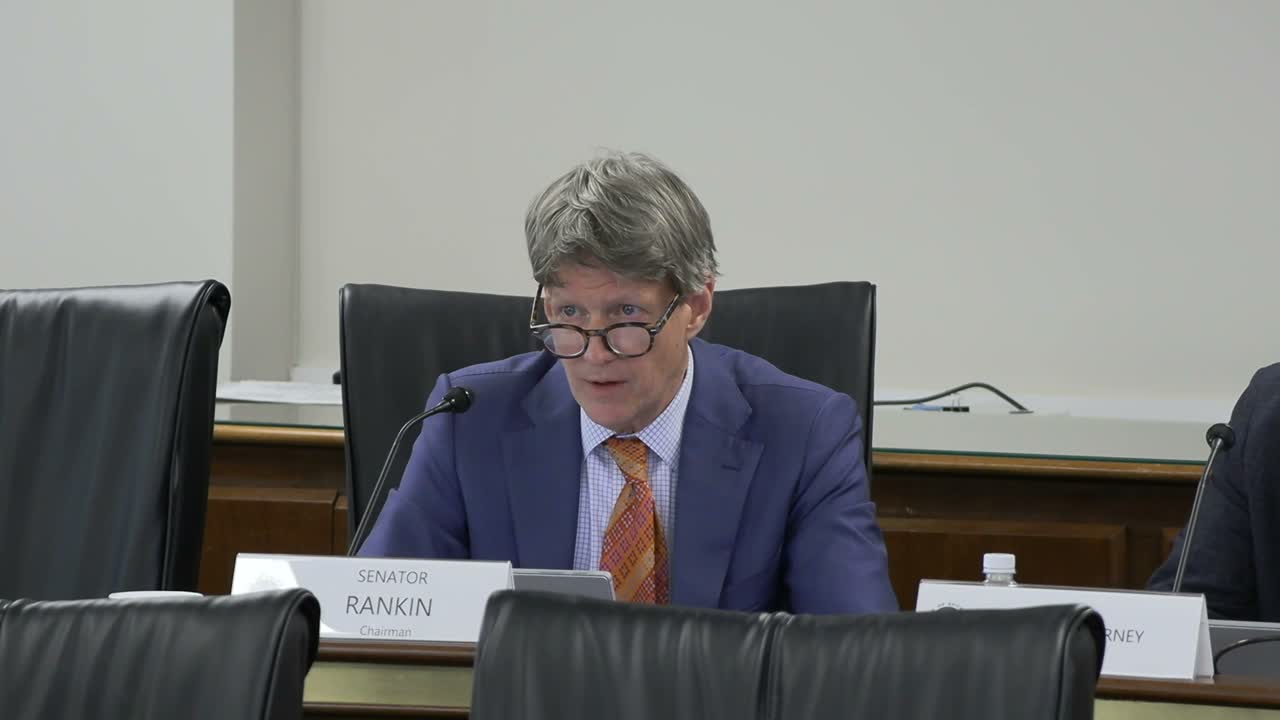
Both industry witnesses urged local officials and state agencies to distinguish between "bad actors" and responsible operators. "City and county councils have to weed out those bad actors," Gillespie said, adding that local zoning and negotiation can keep communities protected while allowing responsible investment. Chairman Rankin closed by asking the companies to present the committee with concrete proposals on what regulatory adjustments would give them confidence without over-regulating.
The committee did not take formal action during this session; members asked the witnesses for follow-up data on specific power and network arrangements.