Ogden council rezones 1201 16th Street for 42‑unit owner‑occupied townhome project
Loading...
Summary
The council unanimously adopted ordinance 2026‑3 to rezone 3.71 acres at 1201 16th Street from R‑2 to R‑2S with a conditional overlay and development agreement capping the project at 42 individually platted, owner‑occupied townhomes with a 10‑year deed restriction; staff and public discussed access, parking and stormwater during multiple public hearings.
The Ogden City Council voted unanimously on March 24 to rezone roughly 3.71 acres at 1201 16th Street to R‑2S and enter a conditional overlay with a development agreement that limits the proposed project to 42 owner‑occupied townhomes and requires a 10‑year owner‑occupancy deed restriction.
Planning staff Joel Simpson told the council the rezoning request is paired with a development agreement and concept plan. “The petitioner would like to be able to develop a townhome project versus single family and duplex development,” Simpson said, noting staff expects a traffic study, soil and utility analyses, and multiple public hearings on preliminary and final group‑dwelling and subdivision approvals if the council adopted the zone change.
Petitioner Gardner Francis described the plan as a voluntary density cap: under current R‑2 zoning the site could theoretically yield up to 63 units, but the applicant is capping the project at 42 units and said the development will include individual platting for ownership. “Our goal is to develop 42 owner occupied townhomes,” Francis said, and he told the council the developer had added about 12–15 visitor parking stalls to a recently updated plat. Francis also said the project would preserve trees along Harrison Boulevard and that estimated added peak traffic would be about 250 daily trips — within the street’s design capacity.
Neighbors pressed the council and petitioner on safety, parking and access. Karen Thurber, who lives about 100 yards from the proposed development, said transmittal materials for the project suggested only one garage parking stall per unit inside a garage with no driveway, creating a likely shortage of off‑street parking and the risk that residents would park on narrow 16th Street. “Adding 12 or 15 guest parking spots is not going to address up to an additional 42 cars that will need to be parked on the property,” Thurber said.
Staff and several council members answered technical questions at length. Simpson said fire‑code requirements typically require a second access for developments of 30 or more units unless fire suppression systems are installed in every unit; he added that detention or retention for stormwater must be engineered and could be on‑site or connected to city systems depending on study results. Simpson emphasized many of these issues are part of subsequent site‑plan and group‑dwelling reviews and are not resolved at the zoning stage.
Council members repeatedly noted the rezone plus development agreement gives the city leverage not available under R‑2 zoning — specifically, the ability to require individual ownership and owner‑occupancy deed restrictions. Several council members urged the petitioner to continue outreach with neighbors as the project moves through subsequent reviews.
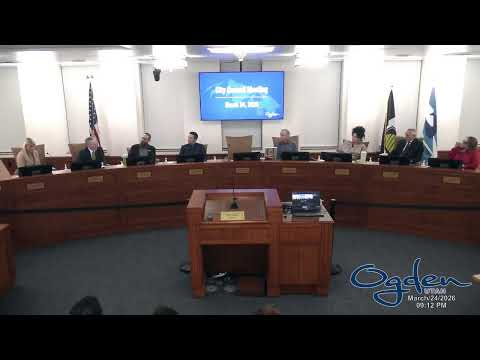
Council member Lundell moved adoption of proposed ordinance 2026‑3; council member Ritchie seconded. The council voted by roll call and the vice chair announced the ordinance passed unanimously.
Next steps include the additional required public reviews (preliminary and final group‑dwelling approval and subdivision review) and technical engineering studies. The development agreement will define the deed‑restriction and other enforceable project commitments; staff said those terms and technical mitigation will be revisited in later, public stages of review.