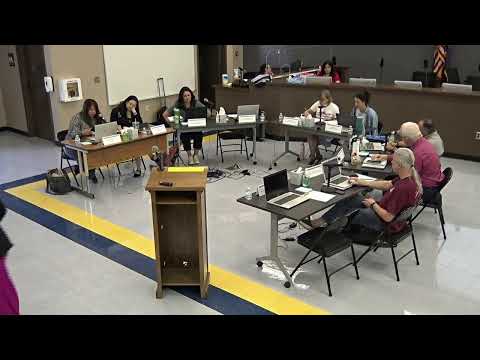
TUSD bond oversight committee approves Q3–Q4 project packages, adds contingency and tech spending amid $100M milestone
Loading...
Summary
The Tucson Unified School District Bond Oversight Committee on March 26 approved separate Q3–Q4 project packages for site upgrades, fencing and educational technology, endorsed a 20% contingency request and heard staff report the bond program has reached roughly $100 million in spending.
The Tucson Unified School District Bond Oversight Committee voted March 26 to approve separate Q3–Q4 project packages for site upgrades, security fencing and classroom technology after a presentation from bond staff.
Doctor Carter, the bond program presenter, told the committee the program has spent about $100,000,000 across more than 350 active projects and reviewed near-term priorities: HVAC, health and safety (including gates and fencing), and updated classroom technology. “We have reached a $100,000,000 dollars total spent in the bond,” Doctor Carter said, noting recent work on domestic waterlines, school fencing and Chromebooks distribution.
Why it matters: the split votes let the committee act on parts of the package independently so funding can be targeted where staff say needs are greatest while preserving oversight. Dr. Carter asked the committee to add a 20% contingency to cover cost increases; staff requested $5,460,552 in contingency funds for Q3–Q4.
Key details from staff presentations and discussion: • Project status and scope: The presentation outlined multiple site-level updates, including a delayed domestic water-line project at Sabino (fire marshal approvals and additional testing required) and six schools temporarily affected by domestic-water work. Doctor Carter said some work could extend into the start of the school year. • Intergovernmental agreements (IGAs): Staff reported about 15 schools are in the IGA process for packaged work and said the IGA program was roughly 48% complete. • Security and site work: The bond program has completed 32 security gates and fencing packages and is processing four more; staff proposed advancing the next 21 sites for gates and fencing. • Technology and devices: Staff said 2,592 Chromebooks previously approved have arrived and been distributed. The Chief Technology Officer, Ravi Hamadi, told the committee active-board panel costs vary by model and size and can run from about $2,000 to $12,000, with many classroom panels at the lower end of that range; he recommended touch-capable panels where funds allow. • EV pilot rebate: Staff reported the electric-bus pilot is on the road and that the district received an approximately $1,100,000 rebate related to the EV project; an investment tax credit (about $70,000) is also being pursued.
Committee questions focused on value and durability of active boards, supply-chain impacts on pricing, and the mix of projects to prioritize. One member warned of broader financial volatility and said he would likely abstain on the technology vote for that reason.
Votes at a glance (roll-call results recorded at the meeting): • 5.01 Item 1 — upgrades to existing facilities (Safford and Santa Rita): motion passed by roll call (recorded as all voting yes in the roll call recorded at the meeting). • 5.01 Item 2 — health, security and safety (security gates and fencing): motion passed by roll call (recorded as all voting yes in the roll call recorded at the meeting). • 5.01 Item 3 — updated educational technology (active boards and staff devices): motion passed by roll call with two abstentions (two members recorded as abstaining; others voted yes).
Following the presentation, the committee approved the bond project updates as presented, approved the minutes of the February meeting, and separated the Q3–Q4 package into the three votes above so the district can proceed with the prioritized work.
The committee also discussed contingency planning and asked staff to continue monitoring cost trends and supply-chain risks. The committee set its next meeting for April 16, when staff will return with updates and any follow-up information requested during the meeting.
Ending: Committee members closed the item after the votes and moved to future-agenda planning.