
House advances FY27 budget with pay-act amendment after floor debate over fund transfers
Get AI-powered insights, summaries, and transcripts
Sign Up Free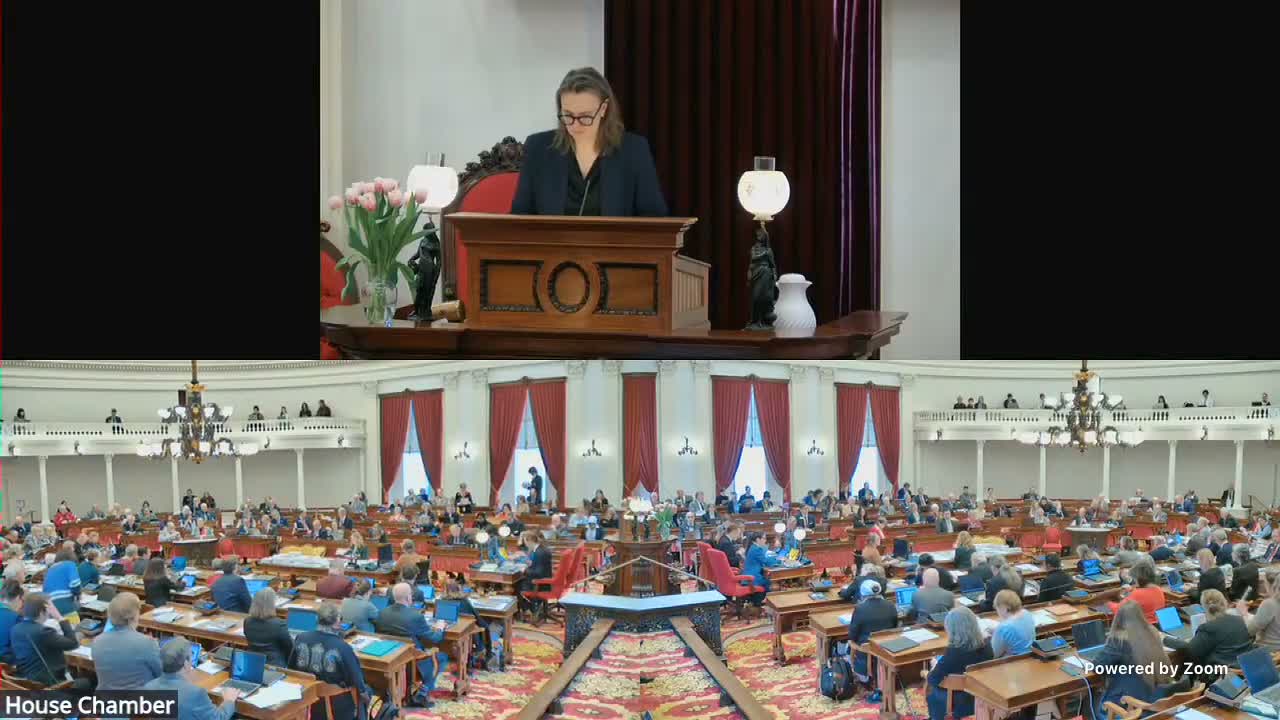
Summary
The Vermont House took up the FY27 budget and adopted a committee amendment that includes the pay act funding for 2027–28 after extended floor interrogations and debate over transfers from the pilot special fund and interest on the Technology Modernization Fund.
The House of Representatives took up the Fiscal Year 2027 budget and, after extended floor debate, adopted a committee amendment that incorporates a multi‑year pay act and several technical corrections.
Representative Shai, presenting the Appropriations Committee’s report, said the bill reflects input from 232 witnesses and combines federal, general, and special funds for total unduplicated appropriations of about $9,334,000,000, a 1.6% increase over FY26. “We had about $250,000,000 in additional budget requests,” Shai said, adding that the committee prioritized housing, health care and services for older Vermonters while funding statutory reserves and pension obligations.
The committee’s amendment—roughly 30 pages in the posted packet—adds the pay act that funds negotiated collective bargaining increases for FY27–28 (including steps and across‑the‑board adjustments), accounts for associated appropriations across general, transportation and other funds, and makes a number of technical corrections in global commitment classifications.
Several members pressed the committee on specifics on the floor. A member from Fairfax sought clarification on sequencing of the budget and the miscellaneous tax bill that supplies revenue; the presiding officer and staff said taking the budget first posed no procedural problem. Other members interrogated committee delegates about particular line items and fund movements. Representative Shai and members who presented sections described a number of one‑time appropriations (including disaster mitigation and targeted human services), position changes and transfers to support programs made necessary by reduced federal funding in some areas.
A focal point of floor dispute concerned the use of the pilot special fund and a separate transfer of interest earned on the Technology Modernization Fund. Several members objected to moving money that originated in locally‑driven pilot taxes into statewide appropriations without direct municipal consultation. One member from Dover said the House was “strenuously” objecting to use of pilot funding and pledged to contest the provision. Representative Bennington confirmed the transfer of $3,400,000 from pilot-related receipts to municipal assistance and described the administration’s recommendation. Member from Linden explained that approximately $9,500,000 of interest had accrued on the technology fund and that the committee elected to use that interest for one‑time needs while leaving the principal for the encumbered IT projects.
Debaters framed fiscal choices against a constrained revenue backdrop. Opponents cited a warned general‑fund shortfall for upcoming years and objected to raising recurring base spending while relying on one‑time resources. Supporters pointed to restores and additions for services they said were essential—examples cited include funding for deaf‑blind interpreter services, community mental health restorations and housing programs.
The amendment was adopted by voice vote after floor interrogation and additional comments. The presiding officer announced that the ayes had it and that the bill was amended. The House then ordered third reading. Leadership later paused the floor for a House Democratic caucus and recessed until the fall of the gavel.
What happens next: The bill as amended is poised for further floor consideration (third reading) and subsequent committee and chamber action on related bills; members flagged that some provisions take effect on later dates (for example, school‑Medicaid administration changes and some transfers effective 07/01/2026 or 10/01/2026 depending on sections).