Get Full Government Meeting Transcripts, Videos, & Alerts Forever!
Get email alerts on the Infrastructure topic
No spam. Unsubscribe anytime.
Spring Hill moves to standardize sewer monitoring, approves under‑sink grease‑trap pilot
Summary
City staff presented technical specifications to monitor sewer allocations using water‑meter and ADS flow data and proposed a pilot to allow under‑sink grease traps for small tenant spaces; the board signaled support with staff to implement monitoring, inspections and follow-up code updates.
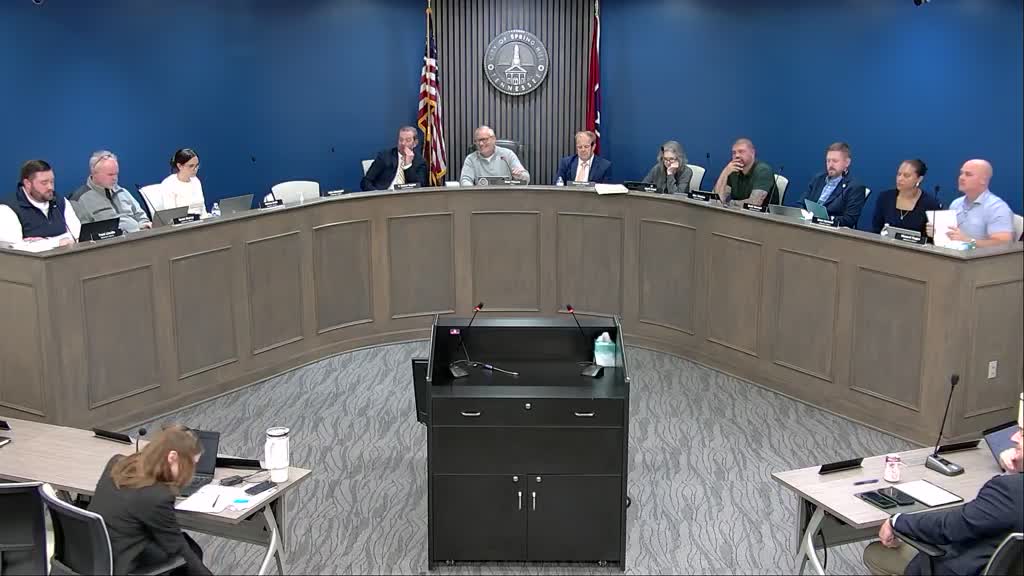
Spring Hill water and development services staff asked the board March 2 to support a technical specification to implement the sewer allocation monitoring provisions of the city’s ordinance and to authorize a pilot program for under‑sink grease interceptors for small tenant spaces.
Michel Lemunyan, speaking for Spring Hill Water, described a two‑track approach: require commercial developments to use domestic water‑meter data (via the city’s existing Badger Meter and Beacon software) to estimate wastewater generation, and require higher‑allocation residential developments to install standardized ADS flow‑monitoring equipment that integrates with the city’s monitoring system. Lemunyan said developers would be responsible for purchasing and maintaining monitoring equipment and for software/communication costs.
“This approach will just balance the system and protect fairness with the developers in the community,” Lemunyan said, describing how water‑meter and ADS data will provide defensible flow numbers for allocation enforcement and TDEC consent‑order compliance.
On grease traps, staff said current code (Title 18 Chapter 4) is effectively “one size fits all,” requiring large traps that can be costly for small tenant buildouts. Staff proposed an under‑sink grease‑interceptor demonstration for a proposed yogurt shop with conditions: staff approval of final specification, installation and maintenance agreements, inspection schedules, monitoring by city staff and removal or upgrade if performance issues arise. Staff said the pilot would inform whether code updates are appropriate.
Board members generally supported the monitoring specification and the grease‑trap pilot but asked for case‑by‑case inspections and safeguards should a small tenant later convert to a higher‑grease use (for example, a full‑service restaurant). Alderman Jimenez and others asked staff to ensure inspections capture tenant turnover so a unit authorized for a low‑impact operation cannot later operate at a heavier grease load without proper equipment.
Staff said they would move the technical specification forward and return with a recommendation to update the municipal code if the pilot succeeds.
• What’s next: staff will proceed with procurement/technical steps for the monitoring specification, begin the grease‑trap demonstration under staff oversight, and report outcomes and any recommended code changes to the board after the pilot period.