Dawson County hears insurer renewal that would raise 2026–27 benefit costs; officials weigh options
Loading...
Summary
At a March 19 work session, Mark Browder of Mark 3 told Dawson County commissioners that negotiated terms for the 2026–27 employee health plan would translate to an effective 8.8% increase over a 12‑month July–June cycle after credits; commissioners pressed for options to control long-term costs.
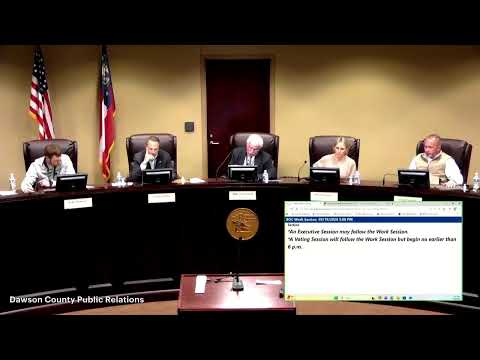
At the Dawson County Board of Commissioners work session on March 19, Mark Browder of consulting firm Mark 3 presented the proposed 2026–27 employee health-insurance renewal and described a hardening market driven by pharmacy and oncology claims.
Browder said carriers are seeing accelerating claim activity nationwide and that new high-cost treatments such as cell and gene therapies, along with increased pharmacy use, are exerting upward pressure on costs. “There’s really no place to hide,” he said, adding that a very small portion of members can drive most of a plan’s spend: “6% of the membership was driving 63% of the cost,” Browder told the board, citing the county’s experience.
Browder said Cigna’s initial 2026–27 offer arrived at about a 33% increase, but negotiations and contract credits — including an approximately $69,000 credit from Cigna and about $37,000 in diabetes and weight-management support — reduced the effective change. He summarized the net impact as roughly an 8.8% increase on a 12‑month July–June basis; Browder also described an intermediate negotiated figure around 10.5% before accounting for credits.
The consultant described an option to extend coverage for 18 months to transition the county to a calendar-year plan and lock rates for that period; in his example an 18‑month extension would reduce an illustrative 15.5% step to roughly a 13.9% effective increase. Browder cautioned that administrative and wellness credits have helped in past renewals but are not guaranteed and that moving to a different funding strategy (for example, self-funding or joining a larger pooled arrangement) shifts more risk to the county while offering different levers to control cost.
Commissioners pressed staff and Browder on mitigation strategies. One commissioner warned the county’s benefits trajectory is “not sustainable,” citing a fixed expense figure of $87,800,000 and asking what steps smaller, less-resourced counties take to manage increases. Browder said options include disciplined self-funding, participating in larger cooperative arrangements, and capturing pharmacy rebate value through contract redesigns — all of which require more financial risk or administrative capacity.
Browder emphasized the difficulty of the market: “I don’t have a lot of hope to offer on this particular subject,” he said, while noting the county’s negotiated renewal compares favorably with some peers that faced much larger increases.
What happens next: staff and the board will consider whether to accept the negotiated renewal on current terms, pursue the 18‑month extension to align to a calendar year, or study alternatives such as joining a pool or moving to self-funding; no formal county action on the renewal was recorded at the meeting.