Get Full Government Meeting Transcripts, Videos, & Alerts Forever!
Get email alerts on the Infrastructure Planning topic
No spam. Unsubscribe anytime.
DES outlines EPA "integrated planning" to prioritize wastewater and stormwater investments
Summary
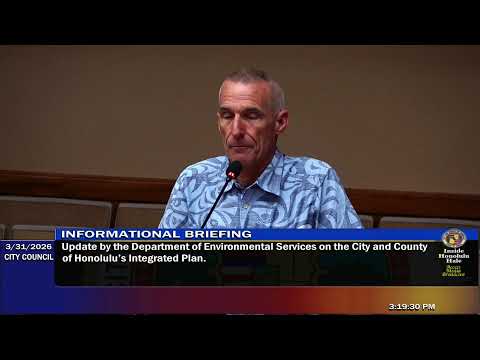
Department of Environmental Services Director Roger Babcock briefed the committee on the city's EPA-recognized integrated planning effort to coordinate NPDES wastewater and MS4 stormwater permit obligations, prioritize projects, engage stakeholders, and sequence investments (plan targeted for 2027; implementation 2028).
The Department of Environmental Services on Thursday briefed the Committee on Energy, Environment and Sustainability on an EPA-recognized "integrated planning" effort intended to coordinate the city's wastewater (NPDES) and stormwater (MS4) programs and prioritize limited public funds to deliver the greatest water-quality and community benefit.
"It provides a long term strategy for improved water quality while addressing both community concerns," Director Roger Babcock told the committee as he outlined the planning framework, the six-step process for characterizing systems, developing alternatives, scoring projects and adapting implementation. He said integrated planning helps the city sequence investments so it can meet permit requirements while holding down rate impacts.
Babcock summarized key drivers: National Pollution Discharge Elimination System (NPDES) permits for the city's largest treatment plants, an MS4 stormwater permit, state TMDLs (total maximum daily loads) for streams and island-wide trash-reduction mandates. He warned that several emerging requirements — including restrictions tied to legacy pesticides such as dioderin and pending PFAS regulation — could add substantial costs. He cited a large project listed in the capital program as "I think 750,000,000," noting the figure as an example of the scale of potential investments tied to permit compliance.
DES has completed an integrated-planning feasibility study and said it is finishing system characterization this summer, with project evaluation and prioritization expected about a year later. Babcock said the department aims to complete and have the plan accepted by 2027 and begin implementation in 2028. The department is coordinating with EPA Region 9 and the state Department of Health and will use an advisory stakeholder group, a public survey and three public meetings (first planned for fall) to set priorities and scoring weights.
Committee members asked about meeting specific deadlines (including 2035 obligations related to Sand Island), how new federal rules could affect costs and what role city and private pumping capacity plays in emergency response. Babcock said the Sand Island obligations are on schedule but that other mandates are not fully funded in current plans and may be reprioritized within the integrated planning process. He distinguished DES's limited-city cesspool-pumping role and its low fee from DFM's flood-pumping functions and noted at least about 35 private liquid-waste haulers provide most pumping capacity on the island.
What happens next: DES will continue stakeholder engagement, survey distribution and public workshops as it develops evaluation criteria and project sequencing; the department is seeking council support as planning proceeds.
Quotes from the briefing and Q&A are attributed to Director Roger Babcock unless otherwise indicated.