Departments outline budgets: disabilities office level‑funded; public works and police describe operational priorities
Loading...
Summary
At the workshop segment the Department of Services for Persons with Disabilities presented a level‑funded budget; Public Works described status‑quo operations with targeted contractual increases and equipment purchases; police leaders reported recruitment gains and requested funding to fill previously authorized positions.
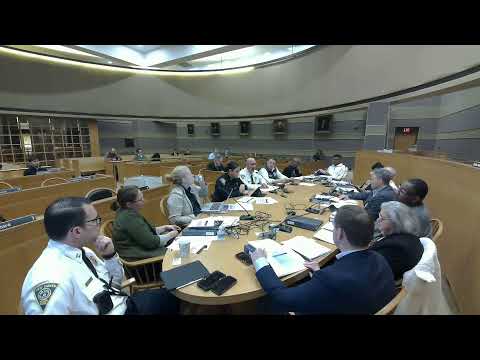
After recessing, the finance committee heard departmental budget presentations and asked questions about operations and budget assumptions.
Services for Persons with Disabilities: Gretchen Knopf (director) presented a status‑quo, level‑funded budget and summarized core services—ADA coordination, accommodation determinations, grievance handling and trainings. Knopf said her office handled roughly 100 calls, 56 accommodation requests and 30 presentations this year and participates on site‑plan review and other city committees.
Public Works: Department leaders described a mostly flat operational budget with contractual increases tied to refuse collection and snow/ice contracts. They reported completing about 7 miles of paving last year, handling roughly 1,181 illegal‑dumping cases, and purchasing two new street sweepers (one new sweeper purchased and another overhauled). Rolling‑stock replacements (sweepers, loaders) were noted as recent capital investments; the department said it caps annual recycling/trash bin purchases from capital at about $150,000.
Police services: Police leadership reported year‑to‑date reductions in violent and property crimes and described improved clearance rates on shootings. Officials said the department now has about 352 sworn officers (up from 330 in 2024), and the proposed budget includes funding to reauthorize and fill about 10 previously authorized positions and a $4.8 million increase tied to added positions and overtime; part of the overtime is offset by ARPA/capital timing in the budget presentation. The department flagged planned uses for additional staffing including walking/bicycle beats, school resource officer expansion into middle schools, and the re‑establishment of a narcotics enforcement/community support task force.
Committee members asked detailed operational questions about snow response, street‑sweeping capacity, training, rolling stock procurement and the assumptions behind overtime and ARPA offsets. Departments responded that some costs can be covered from prior surpluses or grant reimbursements but emphasized the need to balance conservative budgeting with the capacity to respond to weather and emergency events.
Why it matters: These workshops provide the committee with operational detail that will inform amendments and the final budget. Several departments said they are trying to maintain services while absorbing inflationary pressures and contract settlements.