Residents urge bigger Yale contributions and ask aldermen to fund climate office permanently
Loading...
Summary
During a Board of Alders finance public hearing, residents urged the committee to press the mayor for a larger voluntary payment from Yale and to move the Office of Climate and Sustainability from expiring ARPA dollars into the city’s general fund.
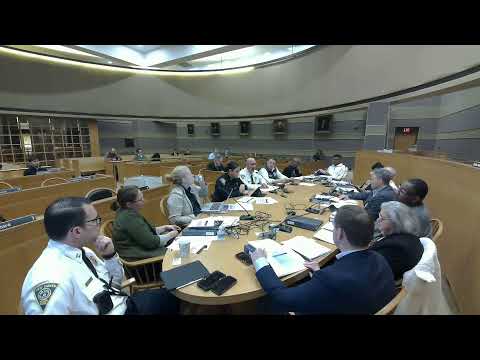
Chair Adam Marchand opened the Board of Alders Finance Committee’s public hearing on the mayor’s proposed FY2026–27 budget on March 31, and dozens of residents spoke about how budget choices affect neighborhoods.
Justin Etheridge, a research analyst at the state Office of Policy and Management who said he lives in Ward 7, told aldermen that Yale’s tax exemptions shift the burden to homeowners. "If they paid the same rate as every homeowner and business, they would owe $180,000,000 a year," Etheridge said, and he cited a figure—attributed in testimony to New Haven Rising—that Yale and Yale‑affiliated hospitals together could owe about $110,000,000 annually after existing offsets. Etheridge urged the aldermen to press the mayor to return to the negotiating table for a larger contribution rather than ask residents to shoulder a mil increase.
Multiple other speakers tied the Yale payment question to climate and equity priorities. Takara Bell of New Haven Rising and the Sunrise Movement asked the committee to fund an Office of Climate and Sustainability (OCS) in the general fund rather than rely on ARPA money that will expire, saying local climate programs disproportionately help neighborhoods facing higher pollution and heat exposure. "We need to invest in a livable, affordable, sustainable future for the city," Bell said.
Former sustainability director Ginger Chapman detailed recent OCS grant wins, including an EPA award (testimony cited about $9.5 million) to support geothermal work at Union Station and related affordable‑housing projects, and urged continued local support to leverage those federal grants and maintain progress on air‑quality and resilience projects.
Advocates from the New Haven Climate Movement and the Yale Center on Climate and Health also described neighborhood data—heat impacts, limited access to cooling, and health symptoms on hot days—and said those findings strengthen the case for maintaining OCS staff and moving its funding to an ongoing line in the city budget.
Why it matters: Testimony linked large institutional revenues, climate resilience and neighborhood health. Residents asked aldermen to treat the climate office as a core city function and to press for larger voluntary contributions from Yale so general‑fund priorities need not be cut to close budget gaps. The committee did not take a vote during the session; it will continue budget deliberations and hold a final public hearing April 30.