Get Full Government Meeting Transcripts, Videos, & Alerts Forever!
Get email alerts on the Student Demonstrations topic
No spam. Unsubscribe anytime.
Sarasota school board votes 3'2 to advertise policy restricting student demonstrations after heated public comment
Summary
After nearly three hours of public comment and board debate, the Sarasota County School Board voted 3' 2 to advertise proposed policy 5.301 on student disruptions and demonstrations, prompting concerns from students, parents and teachers that the language is vague and could chill free expression.
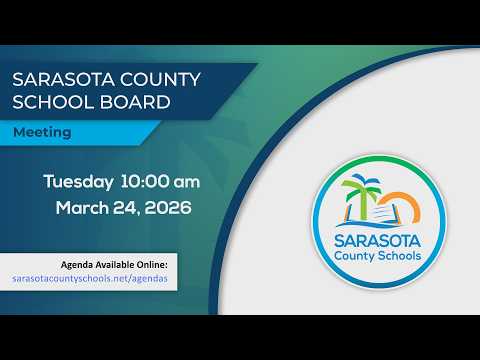
The Sarasota County School Board voted 3' 2 on Tuesday to advertise a proposed policy, 5.301, that would define and set disciplinary pathways for student demonstrations and related conduct on school campuses. The vote follows more than two hours of public comment and a lengthy board discussion about safety, legal limits and the policy's wording.
Supporters of advertising the policy said the district needs clear, content-neutral rules to protect instructional time and student safety. "Students have the right to express themselves, but expression cannot come at the expense of the learning environment," said Lieutenant Colonel Duff Smiley, a Sarasota County resident who urged dissemination of the draft so the community understands boundaries and consequences.
Opponents—many of them students, parents and teachers—said the draft is vague, risks uneven enforcement, and could chill constitutionally protected speech. "Students do not shed their constitutional rights at the schoolhouse gate," said Andrea Buscemi, a Sarasota parent and military veteran, citing the U.S. Supreme Court decision Tinker v. Des Moines. Student speakers told the board the policy's definitions of "demonstration" and "disruptive conduct" are broad enough to be applied unevenly.
Board members debated legal standards and implementation. The board's counsel said the policy relies on established "material and substantial disruption" language from court decisions and that, if applied consistently and content-neutrally, it can be lawful. "Those terms have real meaning," counsel said, adding that the key will be how the board and administrators apply them in practice.
The motion to advertise the policy was moved by a board member and seconded; during the roll-call-style voice vote recorded in the meeting transcript, board member Edwards voted no, Marinelli voted yes, Rose voted yes, Barker voted no, and the chair voted yes, producing a 3' 2 outcome to advance advertisement. Advertising the policy is a procedural step that places the draft in public view for formal comment before any final adoption vote.
Speakers who opposed the policy also framed it as a diversion from other district priorities, pressing the board to address staffing, school safety issues, and budget shortfalls instead of crafting new restrictions. Several speakers urged the board to move meeting times back to evenings so students and working families could participate in meetings without missing instructional time.
The board did not adopt the policy on Tuesday; advertisement means the public will have an opportunity to provide formal feedback before any future adoption vote. Board members who voted to advertise said they expect procedures and training for administrators to follow if the policy progresses so enforcement will be consistent and viewpoint neutral.
What's next: The board recorded the motion to advertise and will publish the draft policy for formal public comment; any subsequent revisions and an adoption vote would occur at a later meeting.
Speakers quoted in this article are drawn from the public record of the March 24 meeting and are identified as they were in the transcript: Paulina Testerman (public commenter), Lieutenant Colonel Duff Smiley (public commenter), Andrea Buscemi (public commenter), and board members Edwards, Marinelli, Rose, Barker, and the Chair (identified by role in the transcript).