New Haven education committee hears facilities review as district flags $18.8 million gap and dozens of repairs
Loading...
Summary
New Haven Public Schools staff told the Board of Alders’ education committee that 12 school buildings are in poor condition and that the district faces a multi‑million‑dollar maintenance shortfall; staff and union leaders urged better vendor accountability, upgrades to work-order systems and a multi-year capital plan.
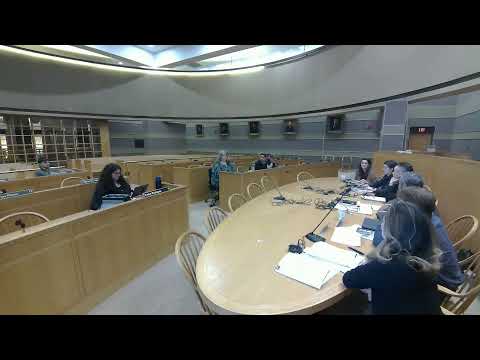
At a March 25, 2026 meeting of the New Haven Board of Alders’ education committee, school operations staff laid out an extensive facilities-management briefing that found 12 school buildings in poor condition, 31 in fair condition and 2 in good condition and highlighted a large maintenance funding gap.
Dr. White, identified in the meeting as the district’s chief of school operations, told the committee the long-range facilities audit used age data, system health and enrollment trends to set priorities and showed “12 of our buildings are in poor condition, 31 are in fair condition and 2 are good,” a tally he said requires immediate and sustained investment to keep students and staff safe.
Why it matters: Committee members and union leaders said building conditions are affecting daily learning — from classrooms kept cold during midterms to damaged science supplies after leaks — and that modest increases in routine maintenance spending could avert more costly emergency repairs and program disruptions.
Staff described the funding shortfall in concrete terms: industry guidance recommends $3 to $4.50 per square foot for maintenance, but New Haven currently spends about $1.70 per square foot, a gap staff said drives repeated, expensive emergency repairs. “We have a very small budget and also prioritizing what we need to do because, of course, first and foremost, we want safe buildings for our students and staff to work in,” Dr. White said.
Operations and procurement: The district described a hybrid facilities model with in-house trades supplemented by a vendor, ABM, and multiple on-call contractors for specialized work. Staff said they are moving from a reactive model (fix when it breaks) toward preventative maintenance, including regular inspections, scheduled maintenance and a multiyear capital plan. Staff also said they are pursuing grant, reimbursement and bond options where possible.
Work-order problems and technology: Committee members pressed staff on the FMX work-order system the district recently adopted. Staff acknowledged implementation problems — incomplete notes, confusing ticket closures and limited reporting — and said they are building out dashboards and reports to measure response and completion times. “There are some great things about it… but one of the challenges is not able to see all the notes, and some confusion in the system,” Dr. White said, adding the district is evaluating more feature-rich systems and piloting procurement workflow tools to speed purchase orders.
Union testimony and vendor accountability: Leslie Glato and Jenny Graves of the New Haven Federation of Teachers testified about operational impacts on classrooms, citing HVAC failures, roof leaks, pest infestations at several schools and the need for clearer communication about repairs. “Our top three concerns are HVAC, roofs and pest control,” Graves said. Union leaders urged the district to enforce contract terms, use performance reviews and hold firms accountable for poor work.
Emergencies and safety steps: Staff described recent emergency responses — including shutting off domestic water to stop a classroom flood, dispatching remediation contractors and instituting 24-hour fire-watch coverage when fire‑pump or alarm issues occurred — and said some short-term costs have been mitigated by using custodial floaters rather than overtime when feasible.
Follow-ups requested: Committee members asked staff to provide a short-list of outstanding school construction contracts to be closed out for state reimbursement, an up-to-date inventory of roofs needing replacement, and a report on average work-order completion times and FMX contract status. Staff agreed to supply the requested lists and metrics for the next meeting.
The committee closed public testimony and agreed to continue the conversation in subsequent workshops focused on vendor performance, capital strategy (including potential bonding and grants) and operational dashboards that the public and school staff can access for clearer timelines on repairs.