Get Full Government Meeting Transcripts, Videos, & Alerts Forever!
Get email alerts on the Transportation Speed Calming topic
No spam. Unsubscribe anytime.
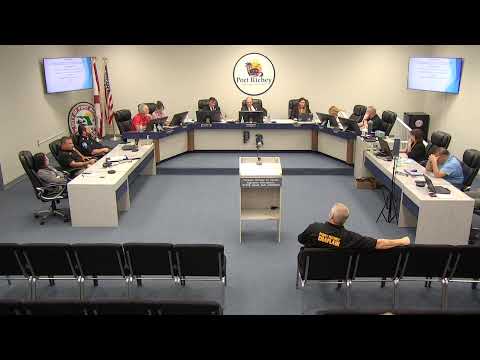
Council approves two temporary speed tables on Grand Boulevard to slow traffic
Summary
The Port Richey City Council voted to install two temporary 14‑foot rubber speed tables on Grand Boulevard to reduce vehicle speeds; council discussed costs, emergency vehicle access and sign placement before approving the measure.
The Port Richey City Council on Tuesday approved installing two temporary 14‑foot rubber speed tables on Grand Boulevard after a discussion about efficacy, emergency access and cost.
City staff presented two product options: a 14‑foot temporary rubber speed table at roughly $5,000 for two units and a wider 21‑foot version priced at about $7,300 for two. Council members debated ride comfort, potential vehicle damage and whether drivers could bypass the devices. "They're temporary. They could last and they can be reused," the city manager said, noting the city can remove or relocate them if needed.
A council member moved to install two 14‑foot tables and the motion was seconded and adopted. The chair announced the motion carried.
Council also discussed placement of advisory speed signs and the police department’s use of sign data for targeted enforcement. Police staff described a plan to collect speed data from the signs to identify problem time windows and focus staffing where the data shows the most frequent violations rather than maintaining continuous patrols. "We can break it down to say 85 percent of our people between 4:30 and 5:00 are doing 48 miles an hour," a police representative said, explaining how the data will guide deployments.
Next steps include final placement of the tables and coordinating signage and enforcement with police to ensure emergency vehicles retain access and to monitor the devices’ effectiveness.