Get Full Government Meeting Transcripts, Videos, & Alerts Forever!
Get email alerts on the School Policy topic
No spam. Unsubscribe anytime.
Parents and advocates back bill to require school notification and after‑action reviews in allegations of serious misconduct
Summary
Supporters urged the committee to back HB 11 68, which would require MSDE to produce a model response policy for local school systems on communicating with families, publishing non‑identifying updates, preserving records and conducting after‑action reviews after credible allegations of serious misconduct involving school employees or volunteers.
Delegate Heather Bagnell told the Ways and Means Committee that HB 11 68 is designed to improve transparency and communication when schools face allegations of serious misconduct. "This bill is not about relitigating a case; it is about learning and transforming trauma into action," she said.
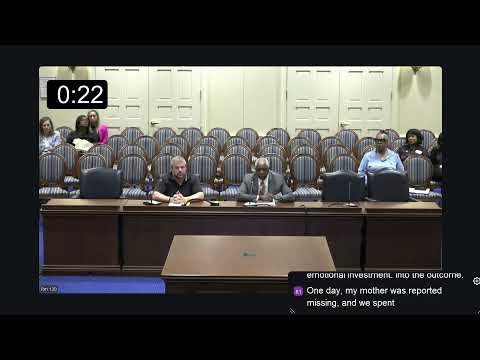
Parents who testified described the emotional toll of delayed or absent notifications after allegations surfaced in local schools. Catherine Yuhas recounted learning only weeks later that a teacher had been removed for credible allegations; she said the lack of timely communication traumatized families and made it difficult for parents to support their children. "Had this bill been in place, it would have made a significant difference for my family," Yuhas said.
Provisions in the bill would require MSDE to develop a model response policy for local school systems that includes time‑stamped public updates (non‑identifying), parent notification timelines, links to counseling and supports, preservation of relevant records for at least one year, and a structured after‑action review within 45 days of case conclusion.
Advocacy groups and clinicians supported the measure. Lisa Jordan of the Maryland Coalition Against Sexual Assault said schools should "connect families to the resources" that currently exist but often go unused. Mental‑health professionals testified that unclear communications can exacerbate trauma for children and families.
Lawmakers asked about due‑process protections and how the policy would balance privacy with transparency. Sponsors said the model policy would limit identifying information and would not replace criminal or personnel processes; it would standardize what districts share and when.
The committee did not vote during the hearing. If returned favorably, the bill would direct MSDE to issue a model policy and require local boards to adopt or align with the guidance, with implementation details to be worked out in subsequent drafting and potential amendments.
Provenance: Hearing testimony and panels (SEG 1776–SEG 2106).