UNIFIL peacekeepers killed as fighting between Israel and Hezbollah intensifies
Loading...
Summary
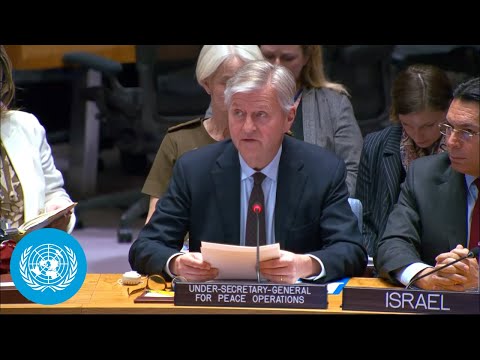
A presenter to the United Nations Security Council reported multiple UNIFIL peacekeeper deaths and injuries amid intensified Israel–Hezbollah fighting along the Blue Line, urged protection of U.N. personnel, and called for full implementation of Security Council Resolution 1701.
A presenter addressing the United Nations Security Council said the situation along the Blue Line had "dangerously deteriorated," reporting that three United Nations Interim Force in Lebanon (UNIFIL) peacekeepers were killed in two separate explosions and several others were injured as clashes between the Israel Defence Forces and Hezbollah intensified.
The presenter told the council that "the secretary general has strongly condemned the 2 abhorrent incidents that led to the death of 3 of our peacekeepers in 24 hours," and provided details: two Indonesian peacekeepers were killed when an explosion destroyed their vehicles near Bani Haiyan in Sector East, and a separate explosion inside a UNIFIL base in Etaibe on March 29 killed another Indonesian peacekeeper and critically wounded a colleague who was evacuated to a hospital in Beirut. "These tragic developments should not have happened," the presenter said.
UNIFIL is conducting investigations into the incidents, the presenter said, adding that initial findings pointed to a roadside explosion striking the convoy in one case and a projectile hitting a base in another. The presenter warned of an increase in denials of freedom of movement and of aggressive behavior toward UNIFIL patrols, describing a March 20 episode when forces at a newly established checkpoint about 4 kilometers north of UNIFIL Nakura headquarters fired warning shots at a UNIFIL patrol and one round impacted a UNIFIL vehicle. He also said an Israel Defence Forces tank fired a main armament round that impacted about 15 meters from a UNIFIL vehicle, causing a puncture.
On March 30, the presenter said, a UNIFIL patrol near Dayal Kanoon, Anar in Sector West came under heavy small-arms fire from a group of roughly 20 individuals blocking the road; an explosion next to the patrol vehicles was reported, the patrol returned fire and disengaged, and there were no injuries in that incident.
"Peacekeepers must never be a target," the presenter said, and added that "the inviolability of the United Nations installations must be respected." He praised the commitment and courage of UNIFIL personnel operating "in these extremely dangerous conditions" and expressed the council’s need to give them "strong and unified backing."
The presenter also accused Hezbollah of daily strikes since March 2, including rockets, missiles and drones into Israel and into the occupied Syrian Golan, and said UNIFIL had reported hundreds of launches from its area of operations that demonstrate the presence of unauthorized armed personnel and weapons south of the Litani River, in what he described as "clear violation[s] of Security Council Resolution 1701." He said the Israel Defence Forces have issued displacement orders for the entire UNIFIL area of operations and continued intensified daily strikes, and noted that some political figures in Israel were openly discussing an extended so-called security or buffer zone.
The presenter said the Lebanese Armed Forces, though largely staying out of direct conflict, had suffered casualties; he reported that on Monday one LAF soldier was killed and several others injured at a checkpoint between Nakora and Tehya.
UNIFIL, the presenter said, continues to reassess force posture to mitigate risks by strengthening force protection, reducing footprint and adjusting operational activities. He said peacekeepers, in close coordination with the Lebanese Armed Forces, had also delivered essential supplies — including food, medicine and hygiene kits — to civilians in hard-to-reach areas near the Blue Line.
Concluding his statement, the presenter urged the Security Council to stand firmly behind UNIFIL and said that "only the full implementation of Security Council Resolution 1701 by both parties will enable a long term solution to the conflict," calling on all parties to recommit to the resolution.
The Security Council record shows the presenter closed by expressing condolences to the families of the fallen peacekeepers and by thanking the council president.