San Mateo Planning Commission approves 181‑unit North San Mateo Drive housing project amid neighborhood parking concerns
Loading...
Summary
The Planning Commission voted 4‑0 to approve a six‑story, 181‑unit multifamily development at 715 North San Mateo Drive, including 19 very‑low‑income units and 180 on‑site parking stalls, after staff recommended CEQA exemption and conditions of approval and after residents raised concerns about parking, scale and notice.
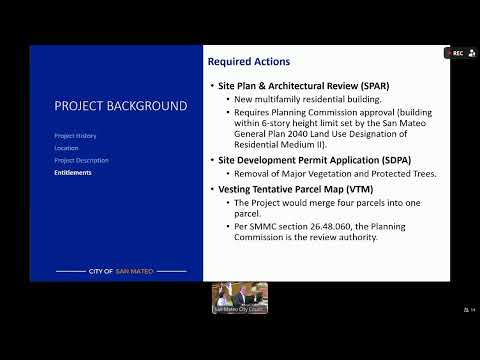
The San Mateo Planning Commission on March 20 approved a staff‑recommended permit package to build a six‑story, 181‑unit multifamily building at 715 North San Mateo Drive, with the project including 19 units set aside for very‑low‑income households and provision of 180 parking spaces. The commission voted 4‑0 to find the project exempt from CEQA and to approve site plan and architectural review, a site development permit and a vesting tentative map.
The staff presentation, led by consulting planner Greg Powell, described the project as roughly 258,000 square feet with a mix of studio through three‑bedroom units and a variety of resident amenities including a pool and fitness room. Powell said the proposal relies on state density‑bonus provisions and waiver requests to exceed some local standards and that the project is subject to recent state laws—including the Housing Accountability Act, SB 330 and AB 130—that limit local discretion and, in Powell’s view, make the project “statutorily exempt” from CEQA review.
Residents and neighborhood speakers urged the commission to slow the project and press for changes. Public commenter Steve Carlson told the commission the application was "incomplete," argued it did not satisfy several elements of the general plan and warned the project would put upward pressure on rents and displace working‑class neighbors. Carlson also said a 73‑page transportation analysis was posted online only the day before the meeting, limiting public review. Another resident, Kathy, pressed for more parking, larger setbacks and a driveway moved off Villa Terrace. Helen Brosnan, a remote commenter, said a six‑story building would be out of scale with the surrounding two‑ and three‑story neighborhood and reiterated concerns about parking and traffic.
Prometheus Real Estate Group, the applicant, and its team responded to the public comments. Jonathan Stone of Prometheus said the project’s parking program reflected empirical usage rates for multifamily buildings located about a half‑mile from Caltrain and that the 180 stalls were chosen on that basis: "At the roughly half‑mile distance mark, we see a usage ratio of roughly 1 to 1, and that's what's being implemented here with the 180 parking spaces," he said. Stone said operational refinements during design and operations could add guest parking options if needed and that protecting significant trees on site required tradeoffs that reduced basement parking by roughly six spaces.
Commissioners questioned staff and the applicant about parking allocations, the number of spaces lost to tree protection, guest‑parking strategies, rooftop mechanical screening and lighting. Commissioner Williams confirmed the applicant would provide shoring for adjacent properties during construction after an applicant acknowledgement. Several commissioners praised the project's interior courtyard and biophilic design while noting the commission’s limited discretion under state housing laws; Chair Patel emphasized the project conforms to the city’s general plan height and density decisions for the study area.
Commissioner Williams moved to adopt the resolution finding the project exempt from CEQA and approving site plan and architectural review, the site development permit and vesting tentative map for construction of the 181‑unit building. The motion, seconded by Commissioner Schumpfel, passed on a roll call vote 4‑0. The commission’s action is subject to the written findings and conditions of approval shown in the staff packet; the decision may be appealed to the City Council within 10 calendar days.
With the approval, the project advances toward permit drawings and building plan check; staff noted that construction‑phase controls such as noise hours, parking for workers and street‑use protections are typically enforced during building‑permit review. The commission closed the item and moved on to routine reports and announcements before adjourning for the night.