Get Full Government Meeting Transcripts, Videos, & Alerts Forever!
Get email alerts on the County History topic
No spam. Unsubscribe anytime.
Presenter traces 18th-century origins and early trade of Georgetown County
Summary
A presenter outlined Georgetown County’s early settlement in the 1710s–1720s, the role of land speculators and surveyors, the placement of plantations along regional rivers, and early exports shipped from the Port of Georgetown after it became a port of entry in 1732.
Presenter (first appearing in SEG 001) delivered a concise account of Georgetown County’s early history, focusing on settlement patterns, land grants and the county’s early trade.
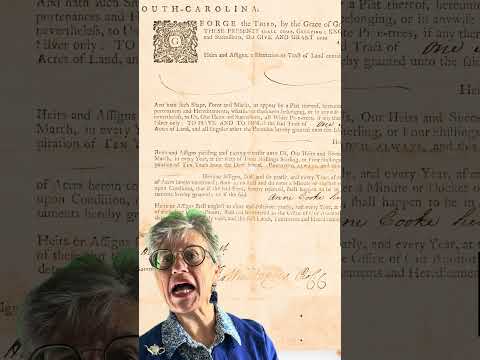
The presentation said many of the first settlers arrived in the 1710s and 1720s, initially as Indian traders from the Charleston area and later as land speculators from what is now Berkeley County. The presenter named local family names such as Allston and Pauley and said these early surveyors began subdividing property in the region.
The presenter described how plantations were laid out along the county’s riverfronts — the Pee Dee (including the Great Pee Dee and Little Pee Dee), the Waccamaw, the Sandpit and the Santee — and said proximity to waterways shaped settlement and agricultural patterns. He noted that early landholders included both those with royal grants and those with proprietary grants, who frequently lived side‑by‑side.
Placing the county’s development in a chronological frame, the presenter dated the first significant land grants to the roughly 1718–1720s era, tied those grants to the Lords Proprietors and cited Winyah Barony; he added that Hobcaw Barony survives today as a sizable property. The talk stressed that Georgetown County was rich in natural resources and cataloged early exports: the Port of Georgetown — established as a port of entry in 1732, according to the presenter — shipped salted beef and pork in barrels, lumber and timber, and naval stores including pitch, tar and turpentine.
The presentation concluded with a call to examine and celebrate the county’s early eighteenth‑century history. No formal motions or votes were recorded in the presentation.