Metro Waste Authority urges battery drop‑offs after rising lithium‑battery fires; West Des Moines has three collection sites
Loading...
Summary
Metro Waste Authority told the West Des Moines council that lithium batteries are driving fires at landfills and recycling facilities, described three local battery drop‑off locations and reported over 14,000 pounds collected toward a 10,000‑pound DNR goal; MWA outlined hazardous‑waste options and proposed manufacturer‑funded legislation.
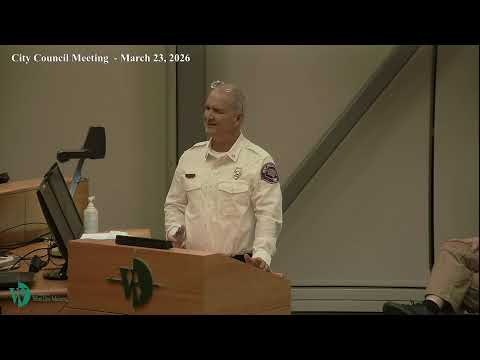
Metro Waste Authority officials briefed the West Des Moines City Council on March 23 about a battery‑collection campaign they say is needed to reduce fires at landfills and recycling facilities.
MWA representative Michael McCoy (introduced by council staff) said lithium batteries—found in items from toothbrushes to e‑bikes—have become a leading cause of fires in transfer and recycling stations. McCoy described a major recycling‑facility fire he said caused approximately $2.5 million in damage and months of downtime.
"Lithium batteries are our biggest problem," McCoy told council. "They can ignite when compacted or smashed. Things you don't think about—vape pens, small rechargeable devices—can start fires that take crews many hours to extinguish."
The agency promoted a 'battery boost' program that accepts all battery types in secure, fireproof collection boxes. McCoy said West Des Moines currently has three battery drop‑off sites (the public library, Valley Junction Community Center and Public Services West) and that the campaign has collected more than 14,000 lbs., exceeding an initial DNR goal of 10,000 lbs. The boxes also accept cords, tablets and small electronics.
MWA highlighted benefits including avoided fire response costs, reduced facility downtime and safer operations at the landfill and recycling facilities; the agency also said it is pursuing legislation to require manufacturer support for lithium‑battery recycling and reimbursement.
Council members thanked MWA for outreach and noted grant funding and partnerships supporting projects such as Legacy Woods stormwater work. Staff provided printed materials with site locations and program statistics for West Des Moines residents.