Get Full Government Meeting Transcripts, Videos, & Alerts Forever!
Get email alerts on the Land Use Zoning topic
No spam. Unsubscribe anytime.
Montgomery County Council unanimously approves zoning changes to speed biohealth projects and mixed‑income housing
Summary
On March 17 the Montgomery County Council unanimously approved two zoning text amendments that expand eligibility for expedited review: ZTA 26‑03 for biohealth campuses and ZTA 26‑04 to broaden mixed‑income affordable housing eligibility, including projects using 4% and 9% tax credits. Sponsors said the changes aim to reduce approval timelines and lower development costs.
The Montgomery County Council on March 17 approved two zoning text amendments intended to accelerate development in the county's biohealth and affordable‑housing sectors.
Chair Andrew Friedson, sponsor of ZTA 26‑03, described the measure as part of the "Accelerate MoCo" package and said the change will reduce barriers to bringing biohealth projects to the county by lowering eligibility thresholds and allowing adaptive reuse of existing office space. "This zoning text amendment is another tool in our toolkit to ensure that Montgomery County doesn't just keep up, but we lead," Friedson said during the presentation.
Councilmember Lauren Sales, co‑lead on ZTA 26‑04, framed the housing measure as a tool to expand mixed‑income affordable housing and to accelerate delivery to residents amid rising homelessness. Sales said the amendment expands eligibility to include projects using both 9% and 4% tax credits and noted estimates that an individual affordable housing project could have saved about $8,000,000 if it had used expedited review. "We're making it easier and faster for our developers to bring these projects to market," Sales said.
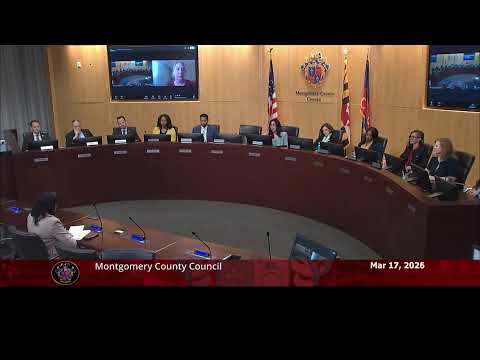
Both measures were recommended by the Planning, Housing, and Parks committee and passed by unanimous roll‑call votes. The clerk recorded 'yes' votes from all councilmembers present during the roll call; both ZTAs were approved without dissent.
Why it matters: supporters said the amendments cut review time and cost—changes officials argued would encourage investment in life sciences and make affordable housing projects more financially feasible. Friedson said the biohealth amendment builds on prior expedited processes that reduced timelines by up to 75% for eligible projects; Sales emphasized the housing amendment's capacity to deepen or expand affordability if development costs are lowered.
What the council approved: ZTA 26‑03 broadens expedited review eligibility for biohealth and life‑science facilities and explicitly allows adaptive reuse of office space. ZTA 26‑04 extends expedited review eligibility to more mixed‑income and tax‑credit projects, broadening the pool of developments that might qualify for quicker permitting.
Next steps: these zoning changes now proceed to any required implementation steps in county planning and permitting. Council speakers noted the approvals are part of a broader FY27–32 capital and economic development strategy that will be finalized during May reconciliation on the proposed budgets.
Sources and evidence: sponsors provided committee reports and staff memos; the roll‑call votes and sponsor remarks are recorded in the council's March 17 transcript.