Lifetime Citizen Portal Access — AI Briefings, Alerts & Unlimited Follows
Louisa County planners urge layered growth-management approach to preserve farmland; commissioners form small working group
Loading...
Summary
Planning staff told the Louisa County planning commission that layered tools—agricultural zoning, subdivision controls and preservation programs—best slow farmland loss. Commissioners heard survey data, questioned economic pressures, and volunteered to serve on a two-person working group to develop options.
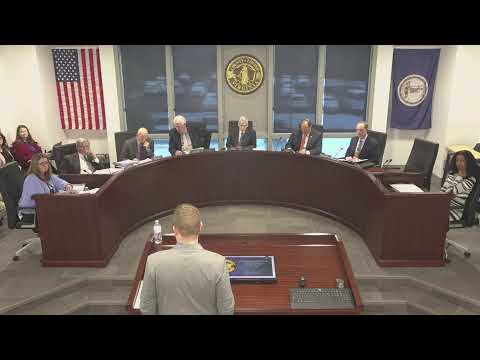
Planning staff presented a research-backed roadmap for preserving farmland at a Louisa County planning work session, saying that a coordinated mix of zoning changes, subdivision controls and preservation programs offers the best chance to slow gradual farmland loss amid rapid county growth.
"Growth management policies do work, but primarily when multiple tools are used together," said Mister Bennett, the planning staff presenter, summarizing a 2022 literature review included in the packet. He highlighted a USDA study showing most farmland loss occurs at urban fringes and warned that Louisa County’s proximity to Richmond, Fredericksburg and Charlottesville places it at heightened risk of gradual agricultural fragmentation.
The presenter cited a case study of Lancaster County, Pennsylvania, where officials used layered measures—agricultural zoning, purchase of development rights and coordinated municipal planning—to protect more than 100,000 acres over decades. He described Lancaster’s approach to agricultural zoning, including treating agriculture as the primary land use, limiting the number of houses that can be created from a farm parcel, and tying residential density to acreage.
Local data factored into the discussion: staff reported a recent comprehensive-plan survey in which 88% of respondents said preserving farmland and forest land is very important; 1,677 respondents supported concentrating development in growth areas; and about 1,400 prioritized preserving rural land and open space. Staff also presented an estimate that roughly 9,300 parcels larger than 1.5 acres currently have no structure on them; that figure was described as an upper-bound estimate because parcel-level constraints (landlocked parcels, division rights, access) were not verified.
Commissioners raised questions about economic pressures that affect farming—commodity prices, the aging farming population, and the difficulty of farm succession. One commissioner said, "Future generations are not interested in farming as the farming community gets older," and asked whether policy alone can halt farm loss. Bennett replied that the packet focuses on land-use tools and that separate efforts—extension services, educational programs and initiatives to connect new farmers with landholders—are also needed.
On incentives, commissioners asked whether Lancaster-style programs or tax rollbacks are feasible. Staff said land-use taxation (e.g., use-value assessments) is a state program outside county control, but local incentive contracts could include recapture or rollback provisions and should be timed to begin with zoning changes to discourage speculative purchases.
As a near-term step, staff proposed and commissioners accepted a small working group to collaborate with staff on concrete zoning and preservation options. Two commissioners volunteered to serve; staff said it would return proposals or schedule a work session after the group drafts options.
The meeting closed with staff offering to share electronic copies of the packet and follow up with commissioners. No formal vote or ordinance was adopted at the session.