PURA hearing presses Eversource on rising storm‑response costs, crew hires and time‑sheet practices
Loading...
Summary
At a March evidentiary hearing in docket 25‑12‑13, PURA commissioners and intervenors questioned Eversource witnesses about higher 'cost per trouble spot,' how the utility decides internal versus external crews, and delays and errors in contractor timesheets and invoicing. The company pledged supplemental data via late filings.
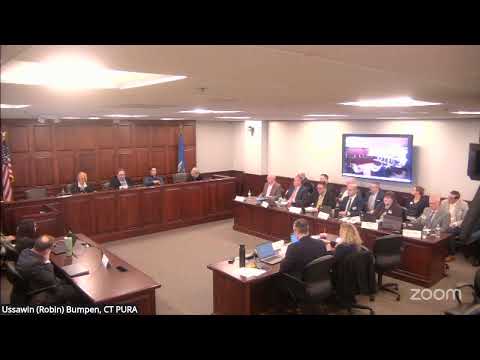
The Public Utilities Regulatory Authority heard detailed questioning March 31 about Eversource’s storm‑response spending, how the company staffs large events and how it records and pays contractor invoices. Commissioners, the Office of Consumer Counsel (OCC) and PURA staff pressed the company to explain rising per‑event costs, multiple work orders for single events, and delays in contractor invoices and timesheets.
At the hearing, OCC’s Kim White pointed to specific exhibit pages and asked company witnesses to reconcile entries that showed travel, tolls and equipment‑movement charges that appear inconsistent with travel statements. White said she had mis‑remembered one filing location and clarified the record before probing travel and toll receipts tied to March invoices. Company witness Jenna Turner read detailed tree‑crew time‑sheet entries into the record, saying that on 02/23 a crew billed 13 hours (12 recorded on the work‑location portion) and that the crew met a response specialist lineman that evening. Turner said supporting documentation would be supplemented to the exhibit record.
Why costs are higher now
The OCC and PURA questioned whether the utility’s costs per trouble spot have increased over the multi‑year review period and what explains any rise. Company witnesses cautioned against simple trend conclusions because many variables influence costs — weather forecast uncertainty, where crews are sourced regionally, the type of system damage (backbone versus service‑level outages), and municipalities’ emphasis on clearing blocked roads early in a response.
As one company witness put it, the same forecast can result in very different mobilization outcomes: crews hired in advance based on a forecast that shifts can appear excessive if damage is smaller than predicted, or insufficient if a storm hits harder than expected. Witnesses also cited labor and materials inflation, the higher use of external contractors for large events, and expanded public‑safety priorities as contributors to higher per‑event costs.
ERP changes and staffing
After PURA’s post‑Isaias directives, the company revised its emergency response plan (ERP) and, in some levels, increased external‑crew guidance. Company witnesses explained the utility has increased its pool of contractors and also invested in internal capacity over several years (apprenticeships and an expanded Response Specialist Organization) so it can rely on more internal crews for many events. But they said even a larger internal workforce could not economically replace the very large external pools sometimes needed for multi‑state or regionally concentrated disasters.
Contractor selection and costs
PURA staff and OCC asked about contractor procurement, contract terms such as right‑of‑first‑refusal arrangements, and how the company weights quality and past performance. PURA staff requested the company provide the quality‑weighting system it uses in contractor selection and the time period it covers. Company counsel agreed to supply those metrics in a late filing.
Timesheets, invoices and late filings
Authority staff focused on invoice handling: how many invoices are rejected and why, how long it takes contractors to submit invoices after work is performed, and how long the company takes to pay invoices after receipt. The company described a multi‑tier review process (invoices rejected and tracked as R1, R2, etc.) and said it can produce overall invoice‑rejection rates by contractor and a query showing invoice receipt and payment dates by storm (PURA staff sought averages such as when 90% of invoices are received). The company agreed to provide those data in late filings assigned at the hearing.
Multiple work orders and cost‑mapping
Commissioners also asked about episodes where a single event had more than one work order on the books. Witnesses explained that in some cases the team initially created regionally segmented work orders (east/west) or separate orders for an event with embedded thunderstorms, then later consolidated or otherwise left multiple orders associated with the same overarching event. PURA requested a narrative and supporting materials showing that costs were not double‑counted across multiple work orders for the identified docket lines; the company agreed to respond in a late filing.
What’s next
The bench assigned a series of supplemental submissions (late files) asking the company to reconcile crew counts, provide contractor rate sheets and selection‑weighting metrics, quantify invoice receipt and payment timing, and explain how specific prestaging and end dates in the work‑order table were chosen. The panel will return for additional testimony and cross‑examination on the outstanding late files and rolling discovery.
The hearing record is large and technical: commissioners and staff stressed they need machine‑readable, auditable data (crew rosters, invoice timestamps, contractor rate sheets and the company’s contractor quality metrics) to draw defensible conclusions about prudence and whether costs should be recovered through deferral mechanisms. PURA set dates for follow‑up filings and the next panel appearances.