Get Full Government Meeting Transcripts, Videos, & Alerts Forever!
Get email alerts on the Planning And Zoning topic
No spam. Unsubscribe anytime.
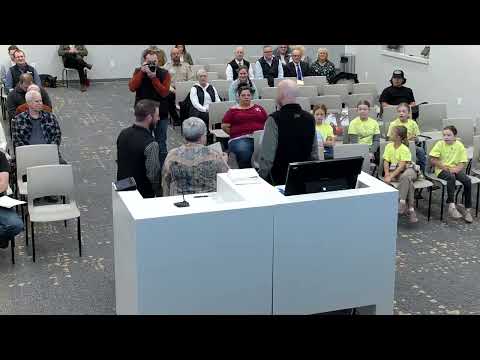
Pennington County commissioners continue contested Snowbird Hideaway variance after hours of public comment
Summary
After more than an hour of public testimony and technical presentations, the Pennington County Board of Commissioners continued a variance request from builder Russell Johnson (Snowbird Hideaway) to April 7 so neighbors, the applicant and staff can pursue easements and additional information.
Russell (Russ) Johnson, a local builder, told the Pennington County Board of Commissioners on March 17 that he wants to develop a planned unit development called Snowbird Hideaway with microlots and about 29–36 homes to respond to local housing demand. Planning staff and dozens of nearby residents pushed back, saying the density proposed for a dead-end road fails public‑safety and rural‑character tests and that the applicant’s proposed emergency egress would be a gated private easement and not a public second access.
The planning director, Britney Hand, told the board that staff recommends denial of variance COVA26‑0006 because the proposed second means of ingress/egress would not be open for regular use by all residents and therefore would not meet the public‑safety standard the ordinance requires. Hand summarized that the applicant has proposed a gated emergency easement to a neighboring parcel and noted staff had received multiple public comments opposing the variance.
Neighbors raised specific concerns about fire safety, water supply and sewage, the scale of lighting and noise, the number of dwellings relative to rural residential zoning (3‑acre minimums), and the potential for property‑value impacts. Michael Steve, speaking for several neighboring homeowners, said the easement as drafted would only apply to the Snowbird residents and would not allow all Palmer Gulch Road residents to use the route in an evacuation, defeating the purpose of a public emergency egress. Vic Alexander and others asked for clearer plans and more notice to the neighborhood; many said they received little time to review materials and that the proposal would more than double local density in an area currently served by wells and septic systems.
Johnson responded that he has worked with state and county agencies on wastewater and water: he said state approval for on‑site wastewater testing has been obtained, two test wells produced what he estimates would be about 8,000 gallons per day at full build‑out, and wildland‑fire mitigation reviews have been completed. He described the intended product as 1,000–1,250 square‑foot full‑time residences, targeted at downsizing seniors and local workers rather than short‑term camping or seasonal cabins, and said he would work with neighbors on light and dust mitigation. He also said he would host a community meeting to walk through the full packet of engineering and mitigation plans.
Commissioners said they wanted more time for neighbors and the applicant to meet and for the absent commissioner (whose vote would be needed for a supermajority) to participate; the motion to continue the variance to the April 7 meeting passed. The continuance gives time for Russell Johnson to pursue recorded easements or other binding access assurances and for staff to collect any outstanding agency approvals or clarifications.
What’s next: The variance will return to the board on April 7. County staff and the applicant were urged to schedule community outreach meetings (several commissioners suggested the Hill City senior center) and to provide clearer documentation about wells, wastewater approvals, access easements and proposed lighting and noise mitigation measures.