Oshkosh school-board candidates at League forum focus on literacy, committee access and library policy
Loading...
Summary
At a League of Women Voters forum ahead of the April 7 election, four candidates for two Oshkosh Area School Board seats emphasized literacy instruction under Wisconsin Act 20, expanding committee access and clearer library-policy roles while offering differing views on consolidation and classroom use of AI.
At a League of Women Voters forum in Oshkosh, four candidates seeking two seats on the Oshkosh Area School Board outlined priorities and diverging approaches on reading instruction, committee access and the board’s role in library selections ahead of the April 7 election.
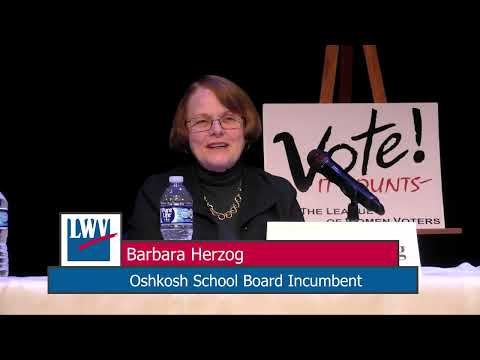
Incumbent Barb Herzog, challenger Mallory Schneider Burschbach, Paul Molitor and Jacob (Jake) Wolf each characterized their experience and what they would press for on the seven-member board. Herzog, who said she attended “every single board meeting” and chairs the facilities and finance committees, emphasized continuity and accountability, listing literacy and math growth, career and technical education, facilities and fiscal transparency among her priorities.
“Teachers are extremely dedicated,” Herzog said, adding the district has purchased new materials and established targeted professional development tied to literacy work under Wisconsin Act 20. “There are personalized learning plans for the students who are in the lower 25% of the performance group,” she said, noting I-Ready assessments are being used multiple times per year.
Mallory Schneider Burschbach, a PTO president and parent, highlighted her community-based perspective and said she would not “rubber stamp” resolutions. She said she wants to listen to families and staff, prioritize student support services and ensure teachers receive training to implement the state’s phonics-focused reading approach.
Paul Molitor framed his candidacy as a corrective voice gained from classroom and blue-collar experience, emphasizing career-readiness programs and smaller-school benefits for student participation. “Smaller schools are better,” Molitor said, arguing larger schools can limit opportunities for some students while acknowledging consolidated schools may be more efficient.
Jacob Wolf, who coaches in the community, said Act 20’s phonics-based approach is a step forward but requires more training and support for teachers. “Teachers are having a difficult time learning this new curriculum,” he said, calling for additional professional development and classroom support so the district can raise proficiency scores.
On committee access, candidates criticized early-morning committee meeting times — repeatedly noted at 7:30 a.m. during the forum — and urged clearer agendas and broader public access. Herzog said committees are publicly noticed under Wisconsin open-meetings law but acknowledged broadcasting and scheduling are obstacles to wider participation.
The panel also addressed artificial intelligence in schools and the board’s role in library selections. Candidates agreed the district needs clear policies on AI; Herzog said the district passed AI policies within the last year and that their use should be defined for appropriate classroom and administrative roles. Molitor suggested limiting classroom Chromebook use to reduce misuse, while Wolf foresaw AI helping with administrative paperwork and identifying students who need interventions.
On library and instructional materials, Herzog said the board approves materials and sets policy but does not select day-to-day library holdings — that responsibility rests with administration under district policy. Molitor said the board should act when community members raise concerns about particular books, and other candidates stressed age appropriateness and educational benefit as decision criteria.
The forum closed with one-minute statements from each candidate and reminders from moderator Margie Davie about polling hours, ID requirements and resources for checking polling places. Voters were encouraged to consult myvote.wi.gov and attend community input events on the district’s strategic plan.
The election is Tuesday, April 7; voters may choose up to two candidates for the two open seats.