Get Full Government Meeting Transcripts, Videos, & Alerts Forever!
Get email alerts on the Budget topic
No spam. Unsubscribe anytime.
Boulder City finance staff briefs council on fiscal‑year 2026 budget; general fund remains balanced
Summary
Budget Manager Angela Maninan told council the FY2026 budget projects $46.1 million in general‑fund revenues and $46.8 million in expenses, with a $1.3 million contingency, a $1.5 million transfer for capital improvements and an estimated general fund balance of $26 million; only unresolved risk cited was labor negotiations.
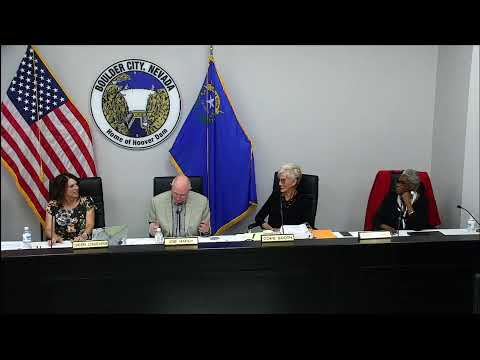
Angela Maninan, Boulder City’s budget manager, presented the council with the fiscal‑year 2026 budget status at the May 13 meeting, detailing revenue sources, projected expenses, headcount changes and near‑term schedule for adoption.
Maninan said the general fund budgeted revenues are $46,100,000, with approximately $16,300,000 (35%) from lease revenues and $15,300,000 (33%) from consolidated tax receipts from the state. Budgeted expenses for the general fund are $46,800,000, with roughly 70% of those expenses for salaries and benefits. The presentation noted a $1,500,000 transfer from the general fund for acquisitions and capital improvements and a contingency of $1,300,000 that can only be spent with council approval. Maninan reported a projected general‑fund balance of about $26,000,000 and said overall governmental funds and reserves are positive.
On staffing, Maninan said Parks and Recreation eliminated a 0.8 part‑time position (classified as temporary for budget purposes), producing a net headcount of 224.4 for FY26 — 0.4 higher than FY25. She said the fleet supervisor position request would add one full‑time equivalent; the position cost is estimated to be shared roughly 75% general fund / 25% utilities with an estimated first‑year net savings of about $75,000 once efficiencies are realized.
Maninan noted that labor negotiations remain the primary unknown cost risk in the budget and that an updated utility rights study is planned in FY26 with implementation in FY27. She walked the council through the budget calendar: public notice and hearing publication in mid‑May and a public hearing and final budget adoption scheduled for the May 27 council meeting.
Council members asked clarifying questions about part‑time classifications, headcount math, cost allocation for the fleet supervisor and the timing of utility rate studies. Maninan explained part‑time positions’ budget treatment, the rationale for the fleet supervisor request, and that rate studies are typically performed every three to five years depending on changes.
The presentation was received; the council did not adopt the final budget at the meeting but scheduled the public hearing and adoption for the May 27 meeting.