Committee member says USPTO has been 'drawn squarely' into politics, criticizes cancellation of Southeast outreach office
Loading...
Summary
A member of the House Judiciary Committee accused the U.S. Patent and Trademark Office of partisan conduct at a hearing, citing low morale after layoffs, moves undermining collective bargaining, exploration of a patent tax, and the cancellation of a planned Southeast regional office in Atlanta.
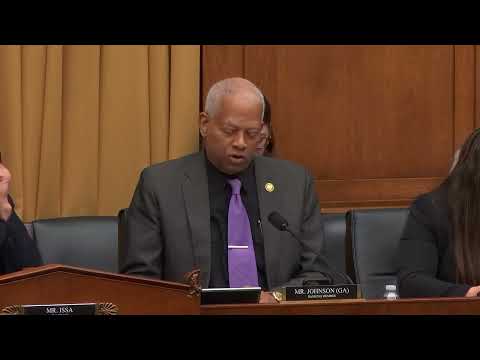
A member of the House Judiciary Committee sharply criticized the U.S. Patent and Trademark Office and its director at a committee hearing, saying the agency has been "drawn squarely" into partisan politics and that recent decisions have weakened the agency's mission and access for regional innovators.
The committee member said the USPTO's workplace morale "has plummeted" under the current administration and attributed that drop in part to agency layoffs and efforts that, in the speaker's view, undermined employees' collective bargaining rights. "When politics begin to shape a traditionally nonpartisan agency, the result is predictable," the member said.
The lawmaker also flagged agency policy actions it described as politicized, including the office's public exploration of a so-called "patent tax," which the speaker said "by all accounts, would have a devastating effect on innovation in The United States." The member emphasized that administrative rulemaking should not replace legislative action and that Congress, not the agency, must decide major policy changes.
A central point of the remarks criticized the USPTO's cancellation of a planned Southeast Regional Outreach office in Atlanta after what the speaker said was a selection process "as prescribed under the law." The member said the administration instead opened the office at USPTO headquarters in Alexandria, Virginia, and argued that "by placing the Southeast office at USPTO headquarters, your agency has limited its reach and concentrated opportunity among those already best positioned to access it." The speaker urged the director to reconsider that placement.
The lawmaker also referenced the USPTO's notice of proposed rulemaking to reform the Patent Trial and Appeal Board, noting similarities to the Prevail Act legislation proposed by Congresswoman Ross and saying such administrative proposals warrant discussion but are not a substitute for legislation.
The committee member closed by stressing that patents require consistent, predictable rules and that shifting agency policy with changing administrations harms American innovation. The member said they looked forward to addressing these issues in Congress and "yielded back the balance of my time."