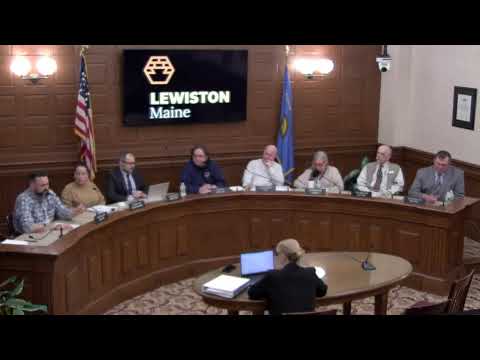
Council hears contentious proposal to fund a Spurwink mobile harm‑reduction unit with opioid‑settlement dollars
Loading...
Summary
Spurwink asked Lewiston for two years of funding from opioid settlement dollars to buy and operate a mobile unit offering naloxone, sterile syringes, wound care and same‑day MOUD initiation. Councilors sought more detail about ordinance language, data on treatment conversions, and coordination with Auburn and shelters.
Spurwink representatives asked the Lewiston City Council to fund a mobile harm‑reduction unit from opioid settlement dollars to expand outreach, screening and same‑day initiation of medication for opioid use disorder.
Catherine Ryder, Spurwink’s senior director of strategic initiatives, said the mobile unit would take services to people who cannot reach the brick‑and‑mortar clinic at 1155 Lisbon Street. “If we could establish a mobile unit that would go out into the community to places that fall within a buffer zone that the council would identify for us, we would be able to bring that care to people most in need,” Ryder said.
Ernestine Peralta described the medical and harm‑reduction services the unit would carry. “The unit would offer naloxone, sterile syringes, fentanyl test strips, and same day MOUD initiation,” Peralta said, adding the mobile program would integrate wound assessment, HIV/HCV screening, telehealth behavioral health and peer‑support connections.
Councilors asked whether Auburn had the same proposal under consideration, how the cities would split costs, and whether state or local ordinances would need changes to authorize mobile syringe exchange. Administrator Kenrath and Director Roy confirmed Auburn is at a similar stage and that the proposal anticipates a shared-cost arrangement; Director Roy noted a current opioid‑settlement balance of roughly $528,004.99 available for allocation, subject to eligibility review.
Councilor Martel expressed moral objections and asked what proportion of mobile activity would be distributing syringes versus providing wound care or behavioral health. Peralta said syringe exchange is a small portion of their brick‑and‑mortar visits and stressed that outreach builds trust that can move people toward recovery. “Sometimes it’s not so much about the syringes, it really was about being able to connect with someone who’s had lived experience,” Peralta said.
Councilors requested a workshop to resolve ordinance language, community input and to review detailed budget pages and performance metrics, including data on conversions to treatment. Staff said the proposal could be funded out of opioid settlement funds if program details meet legal requirements and requested follow‑up materials to confirm eligibility and coordination with Auburn.