Get Full Government Meeting Transcripts, Videos, & Alerts Forever!
Get email alerts on the Solar topic
No spam. Unsubscribe anytime.
Commission reviews Bear Branch Solar concept; state CPCN preempts some local setback rules, residents press forest mitigation concerns
Summary
At concept review, staff and project representatives described a 4 MW Bear Branch Solar project with a state-issued CPCN; commissioners and residents asked about preemption of county setback and forest-mitigation requirements, landscape buffers, and visibility from MD 97.
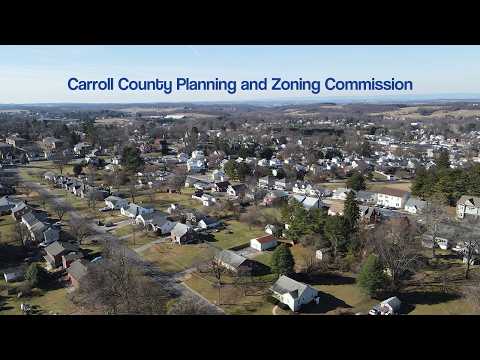
The Carroll County Planning and Zoning Commission received a concept-site presentation on March 17 for Bear Branch Solar (file S250010), a 4-megawatt ground-mounted solar project proposed on roughly 63 acres north of Westminster.
David Beecraft of the Development Review Division said the project has a state Certificate of Public Convenience and Necessity (CPCN) issued Jan. 31, 2025, and that the CPCN process preempts certain local code requirements. He told the commission the proposed array would encumber about 27 acres, that site plans show a 50-foot landscape buffer where forest is not already present, and that the nearest proposed solar array is approximately 65 feet from the property boundary even though county code requires a 100-foot minimum setback.
"The public service commission order . . . specifically preempts local code on that setback requirement," Beecraft said. He also listed CPCN license conditions that require an approved site-development plan, a grounds-management plan, a glare analysis, truck-routing and traffic management plans, and a decommissioning plan that can be activated if no generation for sale to the grid occurs for 12 consecutive months.
Several commissioners and members of the public raised concerns about an apparent inconsistency in forest mitigation rules. One commissioner said, "There's something wrong here," after staff explained solar facilities are not required to meet the same forest mitigation obligations that a residential builder would face. Commissioners suggested the state delegation should be asked about the policy difference and flagged the issue for further discussion.
Residents asked about the visual profile of the panels (site elevation is roughly 10 vertical feet higher than Route 97 and panels may reach 15 feet tall when trackers tilt), the planned tree species for the buffer (red maple, black gum, American linden, red oak, American holly and eastern cedar were listed), and whether there would be energy storage on site (none shown). Project representatives said a glare analysis was provided to the Public Service Commission and zoning administration and that the project's point of interconnection will be underground to existing power lines on the east side of Maryland 97.
Because the concept plan has received state approval on siting (CPCN), the commission's concept review was limited to site-improvement and code-compliance questions; no final local approval was required at this time. Commissioners requested the project return for additional review so they could examine details including landscape buffers, visual impacts from MD 97, and how underground interconnection will be routed.