Get Full Government Meeting Transcripts, Videos, & Alerts Forever!
Get email alerts on the School Facilities topic
No spam. Unsubscribe anytime.
Wayzata staff say ballot measure would let three elementary schools cook on-site, improving meal quality and equity
Summary
Wayzata Public School District staff told a district podcast that Question 2 would fund full kitchens at Sunset Hill, Birchview and Greenwood, allowing on-site hot cooking, larger storage and reduced transit delays that now compromise meal quality and students' menu choices.
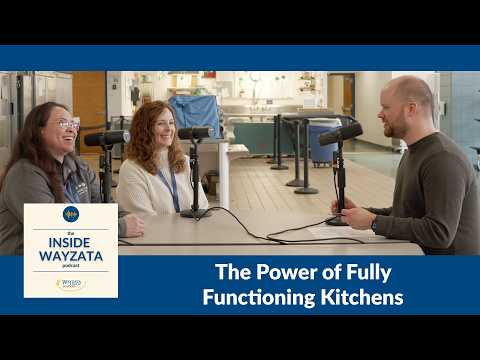
Wayzata Public School District food-service leaders described on a district podcast how a ballot question this spring would convert three elementary “satellite” kitchens into fully functioning on-site kitchens, a change they said would improve meal quality and reduce logistical strains.
Michelle Segedale, director of Wayzata Cafes, and Joanne Kern, a Wayzata Cafes assistant at Sunset Hill Elementary, spoke on the episode about current operations and the limits of the satellite model. “A satellite kitchen is a kitchen that does not have a fully functioning kitchen,” Segedale said, explaining that the district’s satellites lack hot cooking equipment and walk-in refrigeration that are needed to prepare and hold hot meals on-site.
The discussion matters to families because, under the current system, hot meals for Sunset Hill are cooked at Oakwood Elementary, loaded into carts around 8:45–9:00 a.m., and arrive at Sunset Hill roughly 9:35–9:50 a.m. Staff then check temperatures and hold food until the first lunch period begins at about 10:35 a.m. “Lunch is social time,” Segedale said, adding that nutrition is part of the district mission and that meal quality affects students’ ability to focus in class.
Kern described the practical constraints at Sunset Hill: cramped dry storage, small reach-in coolers and a tight prep area that force staff to stack and rotate stock daily. “We play Tetris every day when we receive stock off the truck,” she said, noting that limited cooler space sometimes forces the use of shelf-stable milk, which is more expensive. Both staff said items such as french fries or scrambled eggs lose texture and quality when held for hours on a truck or in warmers.
Staff outlined routine operational risks tied to the satellite model: broken liftgates or ovens at the producing site, wrong carts unloaded by mistake, and weather-related delivery delays that ripple across schools because one truck serves multiple satellite sites. Segedale said those incidents require on-the-spot pivots but can still leave students without their first menu choice when the available items do not hold well in transit.
The proposed upgrades named on the ballot would add the equipment and storage needed to prepare hot meals on-site at Sunset Hill, Birchview and Greenwood, Segedale said. She argued that full kitchens would allow more scratch cooking, expand breakfast options and let student-choice menus include items that currently cannot be produced at satellite sites. Segedale also said vendor deliveries would be more efficient if vendors could drop stock directly at each school rather than routing through an intermediate site.
Kern said the change would improve day-to-day working conditions for kitchen staff by reducing repetitive lifting and the need to move stock between sites. She also described the personal side of the work: connecting with students in the lunch line and aiming to provide meals that children will eat and enjoy.
The podcast noted practical timeline details staff use in planning: Oakwood’s carts must be loaded and depart by about 9–9:15 a.m.; lunches begin grade-by-grade at 10:35 a.m.; the last lunch period starts around 12:45 p.m., with service wrapping up by about 1:00 p.m. Segedale and Kern emphasized that, while food safety procedures (including temperature checks) are followed, the satellite model constrains the district’s ability to serve some hot or freshly prepared items.
The district’s podcast directed listeners to the district’s voter information page (vote.wayzataschools.org) for a short video showing the current preparation-and-delivery process. Election Day for Question 2 is April 14; voters may also vote early at the district service center.
If approved, the ballot language would fund facility upgrades that Segedale and Kern said are aimed at improving the quality of meals and the equity of menu offerings across elementary schools. The podcast did not include budget figures or a formal timeline for construction; those details were not specified on the episode.