Assembly advances package to curb harms from mobile sports betting and study prop bets
Loading...
Summary
The Assembly passed bills requiring monthly account invoices for mobile sports-betting users, modernizing self-exclusion enrollment, and establishing a fast task force on proposition betting. Sponsors said the measures improve consumer information and fact‑finding; critics flagged underage access, advertising, and minority representation on the task force.
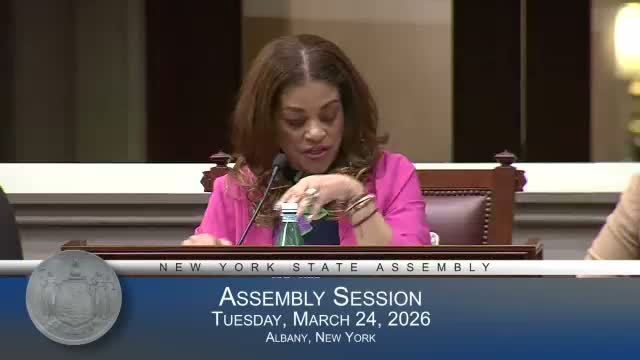
Assemblymember Kasey, sponsor of A.10329, told colleagues the bill would require mobile sports‑betting operators to send monthly “invoices” summarizing how much users wagered, won and lost and to include problem‑gambling resources, calling it “part of a solution” to rising calls for help.
Supporters framed the package as a public‑health intervention. Assemblymember Warner said problem gambling is “a public health issue” and argued modernizing self‑exclusion and improving user information would make help more accessible. Warner and others cited rising hotline calls and other indicators of increased harm.
Members pressed sponsors on scope and implementation. Assemblymember Moreno asked whether the legislation addresses underage access, and Kasey acknowledged the bill does not directly solve VPN‑enabled underage accounts, saying that is a separate conversation for the Assembly and the executive branch. Assemblymember Fitzpatrick described mobile betting as a source of “havoc” for inexperienced bettors and urged broader limits.
The package also included A.10538, a temporary task force on proposition (prop) betting presented by Assemblymember Boris to study market manipulation and the risks prop bets pose to sports integrity. Boris said the task force is meant to be “extremely fast” and report by year’s end; critics noted its four‑member composition (two governor appointees, one appointed by the Assembly speaker, one by the Senate majority leader) and complained there was no guaranteed minority representation.
All three measures in the betting package were adopted by voice or recorded vote on the floor. Sponsors said the rules would take effect after gubernatorial action and, for some measures, on the January following signature to allow operators time to implement formatting and delivery of required notices.
The action signals the Legislature’s intent to pair consumer‑facing transparency tools with fact‑finding on prop bets and other emerging products in the sports‑betting market.