Alaska Railroad outlines phased Seward Freight Dock expansion to enable roll-on/roll-off cargo and strengthen supply-chain redundancy
Loading...
Summary
The Alaska Railroad told the Senate Transportation Committee on March 31 that Phase 1 will lengthen the Seward Freight Dock to about 1,000 feet (funded, $25M) with completion expected in 2027; Phase 2 would widen the dock to 300 feet (estimated $8.5M) to support three-ramp roll-on/roll-off operations and provide contingency capacity for the Port of Alaska.
Alaska Railroad officials told the Senate Transportation Committee on March 31 that a two-phase expansion of the Seward Freight Dock would improve efficiency, safety and statewide supply-chain resiliency by allowing larger vessels and roll-on/roll-off operations.
Megan Clemens, External Affairs Director for the Alaska Railroad Corporation, and Christy Terry, the railroad's vice president of real estate, presented the project and master-plan background. Clemens said the railroad's master plan calls for lengthening the existing freight dock by roughly 375 feet (from just over 600 to approximately 1,000 feet) and ultimately widening the dock to a uniform 300 feet to accommodate larger vessels, simultaneous berthing and safe RoRo ramp operations.
The railroad detailed a two-phase approach: Phase 1 (dock lengthening) is estimated at $25 million, the project has funding in place and construction is scheduled to begin later this year with an expected 2027 completion date; Phase 2 (widening to 300 feet) is estimated at $8.5 million and is the subject of a pending USDOT BUILD grant application (the railroad said a decision is expected by June 28). Clemens said the railroad previously secured a MARAD PIDP grant (awarded in 2020 for just under $20 million) with a $5.5 million Alaska Railroad match that allowed a rescope after pandemic-related delays and inflation.
Christy Terry provided operational context: the Seward Freight Dock handles roughly 100,000 tons of inbound freight annually and about 30,000,000 gallons of fuel transferred via pipeline; it currently serves barges, containerized and break-bulk cargo, research, military and other vessels. She said the port is ice-free year-round and that localized weather, not seasonality, causes occasional short-term delays. The committee asked about dredging and Terry said the last significant dredge was more than 10 years ago and that routine maintenance has kept operations functional.
Industry partners emphasized contingency benefits. Corey Nichols, vice president and general manager of TOTE Maritime Alaska, said Seward would be an ideal contingency port for Orca-class roll-on/roll-off vessels if the Port of Anchorage were disrupted, but also noted the company's two-ship schedule limits routine service to a second port without additional vessel capacity. Bruce Agnew of the Pacific Northwest Economic Region (PNWER) urged federal support, saying PNWER is pursuing additional funding and outreach to MARAD and congressional delegations to secure the remaining funds for phase 2.
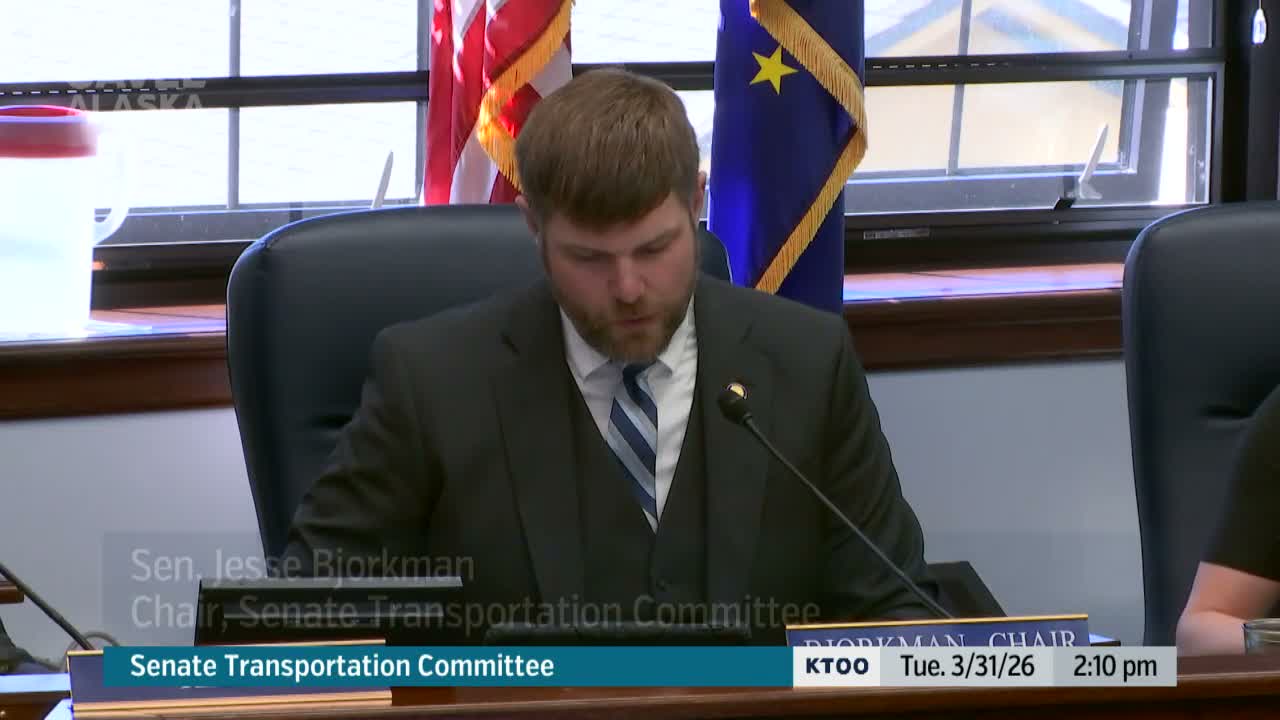
Committee members asked whether a legislative letter would help the BUILD application; Clemens said yes and requested committee support. Chair Senator Bjorkman closed the meeting after thanking presenters; no formal committee action was taken on the Seward presentations.
What happens next: Phase 1 is funded and scheduled to progress toward 2027 completion; the committee may consider a support letter for the pending BUILD grant before the program decision deadline.