DNR review: 2025 wildfire season cost the state millions, 2026 looks 'normal' but resource competition looms
Loading...
Summary
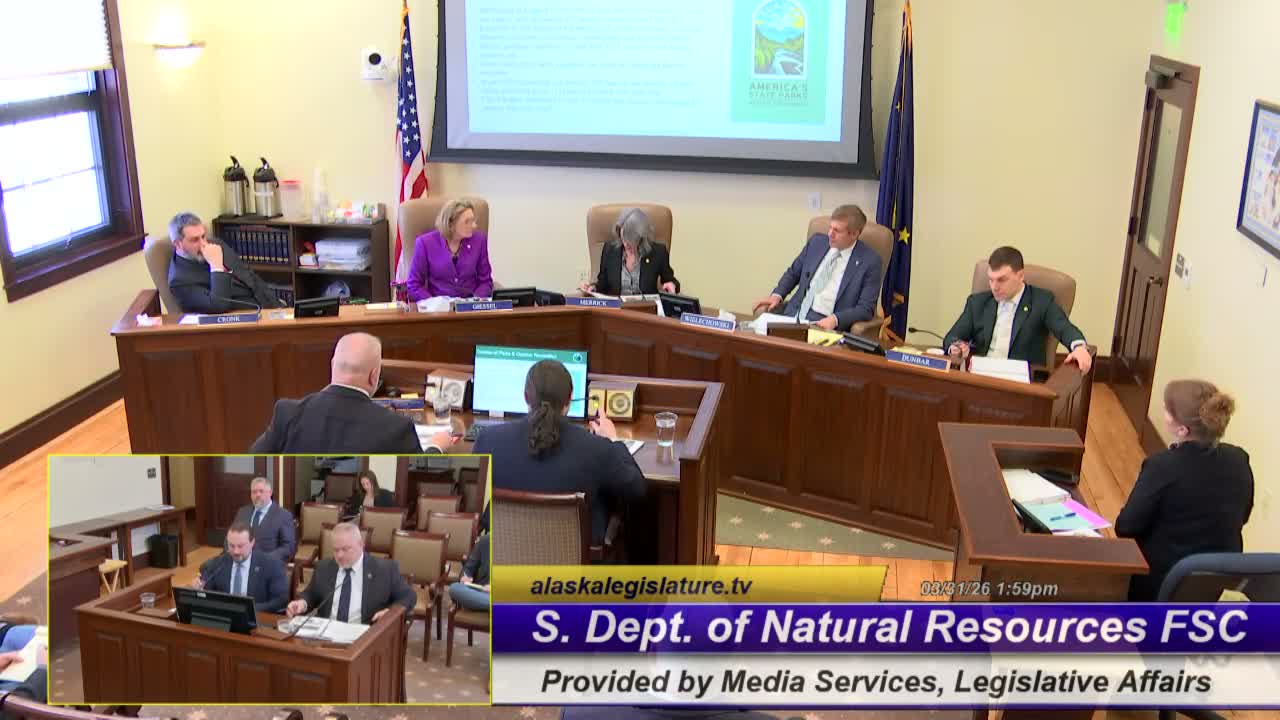
Deputy Director Norm McDonald told the Senate subcommittee that 2025 produced many expensive fires near communities (including the Bear Creek fire that cost about $10 million), required ~3,500 imported lower‑48 resources, and that 2026 projections are for a normal Alaska season but possible competition for national resources due to dry conditions in the Lower 48.
Deputy Director Norm McDonald, who identified himself as deputy director for the Division of Forestry and Fire Protection, reviewed the Division’s organization, the 2025 fire season and preparations for 2026. He said the division organizes fire work around four pillars—preparedness, prevention, mitigation/fuels and suppression—and that more than half of Alaska fires are human caused, which motivates prevention and outreach.
McDonald said Alaska’s 2025 season began with an early thaw in some regions but then saw a mid‑June warming and drying trend that produced heavy lightning activity: "about 55,000 strikes with 173 new starts," followed by a multi‑day red‑flag wind event that drove large fire growth. He said the division imported roughly 3,500 lower‑48 resources last year, including 43 crews with just under 900 crew members and about 2,600 overhead orders such as incident management teams and dispatch support.
The deputy director walked the committee through several costly incidents. He said the Bear Creek Fire north of Healy was about 35,000 acres and produced a final bill of roughly $10,000,000; approximately 40% of that acreage was on federal land and 60% on state land, making the state’s immediate responsibility about $6,000,000 with an expected $4,000,000 federal reimbursement. McDonald added that where FEMA grants apply, a Fire Management Assistance Grant (FMAG) can recover about 75% of state suppression costs for qualifying state‑land impacts, but reimbursement and audit processes can take two to three years.
Senators asked about FMAG eligibility and long‑term cost trends. McDonald said FEMA criteria shift annually and that fires affecting evacuations or threatened critical infrastructure are typical FMAG candidates. He told the committee aviation costs have risen dramatically—"Aviation costs have gone up about 128% over the last 10 years for firefighting aircraft"—and that average annual fire spending runs near $68,000,000, with higher totals when fires threaten communities and require imported crews and aircraft.
On staffing, McDonald said the division’s firefighting complement is about 350 positions, of which roughly 250 are seasonal operational employees; a mission‑critical incentive pay implemented two years ago improved recruitment and reduced vacancy rates, and the department is pursuing a class‑study to make pay changes permanent. The division also supports all‑hazards responses and sent incident teams to the Lower 48 in recent months; McDonald cautioned that while Alaska’s 2026 outlook currently shows no red zones and a projected normal season (~1,000,000 acres), increased demand from the drought‑affected Lower 48 could create competition for national assets.
McDonald closed with operational updates: the new equipment storage facility was handed over recently and is expected to be operational in June, and fuel‑break maintenance is an ongoing responsibility with a typical 15–20 year refresh cycle. He said long‑term land‑management decisions about leaving trails or fire lines open are made by the land manager (state, federal or municipal), and DNR coordinates with other divisions and partners to maintain strategic fuel breaks.
The subcommittee did not take formal action; members asked for follow‑up detail on mitigation funding needs and hiring timelines.