Get Full Government Meeting Transcripts, Videos, & Alerts Forever!
Get email alerts on the Child Welfare topic
No spam. Unsubscribe anytime.
State review clears Beaufort County DSS of legal violations; public commenters say deeper failures persist
Summary
North Carolina DHHS reported its review of three child-welfare case files found Beaufort County Department of Social Services acted within law and policy but noted systemic court continuances; public commenters at the county meeting disputed the sufficiency of that review and alleged broader failures, including claims of perjury and long custody durations.
The North Carolina Department of Health and Human Services told the Beaufort County Board of Commissioners that a recent formal review of three child-welfare case files found the Beaufort County Department of Social Services acted within applicable statute and policy, though DHHS identified a systemic issue related to repeated court continuances tied to court scheduling and the district’s transition to the eCourt system.
"After a thorough review of those case files ... it was determined that Beaufort County Department of Social Services acted within policy and statute," said Meredith Houchins, introduced to the board by staff as an interim section chief with DHHS. DHHS officials told the board most continuances were due to court scheduling restrictions between October 2024 and May 2025.
The DHHS representatives — introduced to the meeting and participating via Webex — said the county’s case files were organized, documentation was well written, and staff cooperation was appreciated. DHHS also offered a copy of its written letter to county officials.
The DHHS report did not resolve tensions among residents who spoke during public comment. "You have a missing child. You have ... a child die in your custody," said Juanita, a frequent public commenter, who cited what she described as a "70 percent failure rate" in a state report and urged the board to do more than review three cases. "On average, these children are in care 3 to 5 years. How is that acceptable?" she asked.
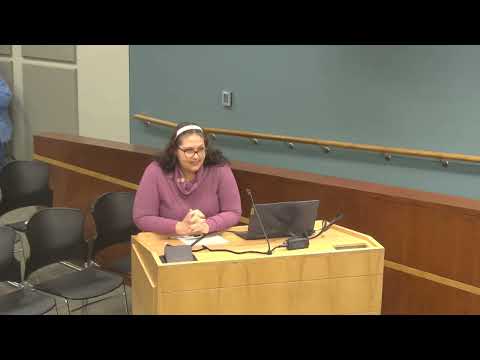
Sarah Lee, who identified herself as a family-integrity advocate, said she intends to take allegations of social-worker perjury to the U.S. Department of Justice and cited case law as part of her argument. "This is going to the DOJ, gentlemen, and I am taking it there personally," she said.
Board members and staff framed the state review as an important check and said the identified issue — repeated court continuances — appears linked to district court scheduling and a technology transition, not county practice. County staff said they would provide the DHHS letter to the board’s records and be available for follow-up questions.
What happens next: DHHS provided the written review to the county and noted how to contact the division with further questions; residents at the meeting continued to press for broader reviews and for policy or budgetary changes to address concerns about reunification funding and case timelines.