Maine House approves $207 million bond package after floor debate over fiscal priorities
Loading...
Summary
The House passed LD 2094, a roughly $207 million bond package funding transportation, wastewater, housing and other capital projects, after members traded arguments over long‑term fiscal responsibility and use of limited bonding capacity. The measure moves to voters for approval.
The Maine House on March 30 approved LD 2094, a roughly $207,000,000 bond package that sponsors said would fund roads and bridges, wastewater and municipal infrastructure, and targeted housing programs.
Representative Westberg (Westbrook), a leading proponent, said the package targets rural needs and leverages the state's strong bond rating. "This bond package . . . will help expand housing opportunities, repair and modernize roads and bridges, strengthen Maine's food systems and our agricultural economy," Westberg said, adding that bonding spreads costs over time and leverages federal and local matching dollars.
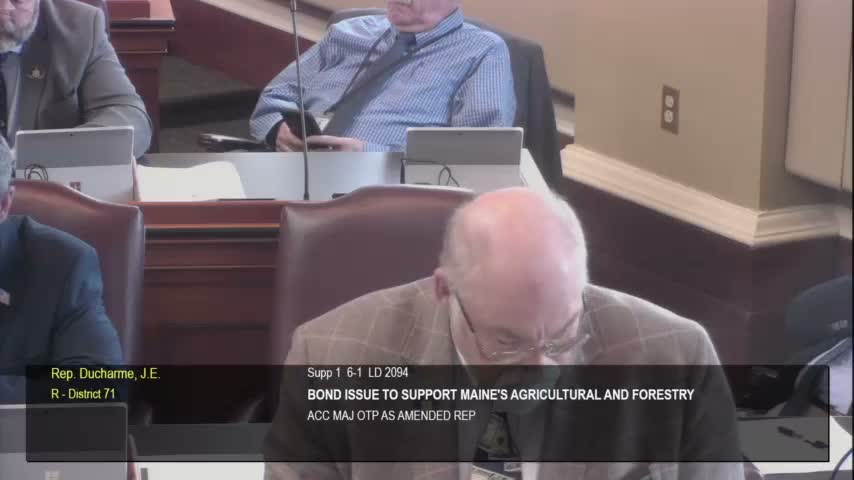
Opponents said the timing and scale are risky. Representative Ducharme (Madison) said the package "comes real close to what we're told the bonding capacity of the state is" and announced he would vote against it. "It kind of feels like we're using up all of our bonding capacity before this administration goes out the door," Ducharme said, urging caution about leaving the next governor with limited fiscal flexibility.
Other members framed the choice as needs versus long‑term affordability. Representative Plyer (Buxton) described voters’ burden if expensive items were deferred into bonds rather than included in the operating budget. Representative Perry (Arundel) criticized part of the package as a temporary fix, calling the $65 million for transportation "a band aid on an amputation" and urging permanent revenue solutions.
Supporters emphasized specific allocations included in debate: legislators cited roughly $65 million earmarked for transportation projects, a $15 million allocation for rural affordable rental housing and a $5 million pilot for mobile‑home park preservation as examples of targeted investments for communities that lack large projects to attract private funding.
After extended debate the House approved the measure on a roll call and will send it on for final enactment steps and voter consideration where required. The roll‑call numbers on the acceptance motion recorded in the transcript were 73 in the affirmative and 64 in the negative.
Why it matters: The bond package would fund capital projects across Maine’s towns and cities, including rural communities that proponents said lack other financing options. Opponents warned the bond, combined with recent spending trends, risks constraining future budgets and increasing borrowing costs.
Next steps: LD 2094 proceeds under the legislative process noted on the floor; supporters said parts of the package would be presented to voters where state law requires, while the House and Senate will complete final enactment actions.