Committee hears competing views on permanent daylight saving time; sponsor sets bill aside
Loading...
Summary
At a first hearing on House Bill 41, sponsor Representative Allard advocated adopting permanent daylight saving time for health, safety and economic reasons; dozens of public callers and expert witnesses gave mixed testimony and the committee set the bill aside for further comparison with related measures.
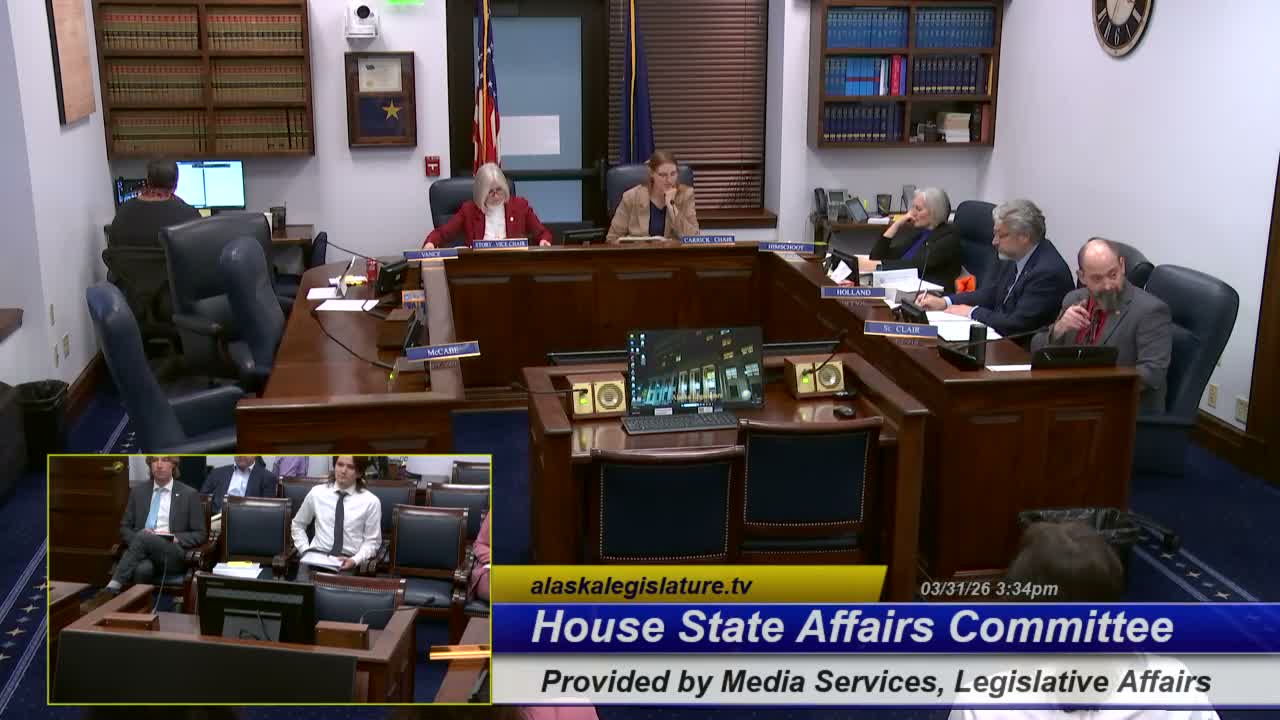
The Alaska House State Affairs Committee heard sponsor and public testimony March 31 on House Bill 41, a proposal to adopt permanent daylight saving time in Alaska that would take effect if and when federal law is changed.
Sponsor Representative Allard told the committee HB41 would adopt year-round daylight saving time in state law and cited research she said links the seasonal time-change to sleep and mood disturbances and to traffic-safety harms. "Permanent daylight savings time would allow Alaska to strengthen its economy... and improve public safety," Representative Allard said as she described the bill and its sections.
The hearing drew a mixture of support and opposition in phone testimony. Larissa Fonoff of Wasilla said the clock change "disrupts family" and urged eliminating it. Phyllis Mulligan of Sitka said she enjoys summer evening daylight and supported the change. Tom Williams of Juneau recommended passing either HB41 or Senate Bill 26 so Alaska could align with federal action, saying one path might be quicker.
Several callers and an invited witness deployed research and economic arguments on both sides. Susie Crosby provided extended testimony arguing for HB41 and spotlighted the potential economic harms to summer industries under alternative proposals. JP, president of the nonprofit Safe Standard Time, called from Arizona and urged the legislature to back permanent standard time instead, citing sleep-health studies that he said show worse outcomes under daylight saving time.
Representative Allard closed by noting technical differences between HB41 and SB26 and saying she is willing to work with colleagues. The committee set HB41 aside for later consideration while it evaluates competing bills and waits for further conversations about which option to pursue.
No formal committee vote occurred on HB41 during the hearing; the item was set aside for future consideration.