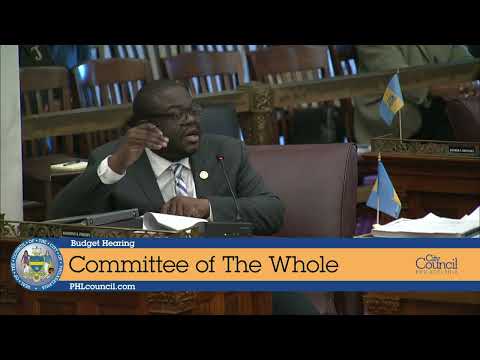
Public Property and Fleet outline capital needs, EV goals and a plan to map city properties
Loading...
Summary
Commissioners for Public Property and Fleet Services defended FY27 requests and described plans to expand electric vehicles and charging while building a real‑estate team to inventory city properties and explore purchasing versus leasing.
Two city commissioners told council they are requesting budget authority to maintain and modernize city assets and to accelerate the fleet's shift to alternative fuels.
Joe Braske, Commissioner of Public Property, thanked council and said his department is building staff capacity — including a newly onboarded deputy of real estate and GIS staff — to inventory city‑owned buildings and speed disposition or maintenance work. Braske said he will provide council with a breakdown of which departments lease space and a plan to identify opportunities to buy buildings instead of long‑term leasing.
Joseph Rosati, Commissioner of Fleet Services, described a FY27 operating request of $76,160,000 and a capital borrowing ask (discussed in the hearing) of roughly $32,000,000 to replace vehicles, including 15 medics, 44 pumpers, two ladders and 30 trash compactors. Rosati said the fleet now includes 1,695 alternative‑fuel vehicles, including 569 battery electrics, and that the department seeks to reach 1,000 battery electric vehicles by 2032; he cautioned that emergency and heavy equipment transitions remain a technical challenge. Rosati said the city has two municipal fast chargers for city vehicles and about 126 Level‑2 chargers, and that additional fast chargers are planned across the city.
Why it matters: The capital and borrowing requests will affect the pace of equipment replacement and the city's capacity to host major events in 2026; council members also pressed for a strategic plan to reduce annual lease spending and to address a multi‑year maintenance backlog.
Council asked for more detailed cost and timing data; Braske agreed to provide a district‑by‑district inventory of leased versus city‑owned space. Rosati and Braske also discussed workforce development: Fleet runs a high‑school intern program (61 interns currently) that funnels graduates into apprenticeships, but both commissioners said recruiting and retaining skilled tradespeople remains difficult and pay equity and tools allowances were highlighted as retention challenges.
Representative quote: “Our goal is to get to 1,000 [battery electric vehicles] by 2032,” Joseph Rosati, commissioner for Fleet Services.
Ending: Commissioners pledged follow‑ups: a GIS‑backed inventory of city properties, a breakdown of leased buildings and programmatic details about planned chargers and vehicle replacement schedules; council recessed the hearing until April 1.