City officials credit cybersecurity investments as they lay out 3‑1‑1 integration and digital‑navigator expansion
Loading...
Summary
Philadelphia's chief information officer said recent investments cut malicious phishing reports and high‑risk sign‑ins sharply; the city will gather 3‑1‑1 integration requirements May–September and seek FY28 funding, while expanding in‑house Digital Navigators and distributing laptops to residents.
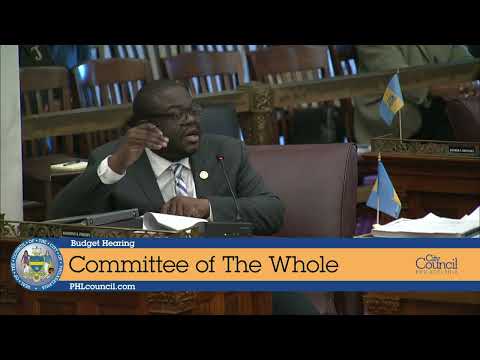
Philadelphia City officials told the city council during a budget hearing that investments in cybersecurity and digital inclusion are producing measurable effects while additional systems work and funding remain necessary.
Melissa Scott, the city's chief information officer, said the city used funds from the prior fiscal year to invest in email filtering and perimeter defenses. “There was a 90% decrease in malicious phishing emails that have been reported,” she said, and also reported “a 69% drop in high‑risk suspicious sign‑in attempts,” which she attributed to improved email blocking and reduced exposure to intrusion attempts. “Our perimeter defense is working,” Scott said.
Why it matters: Council members said the improvements reduce immediate risk to sensitive city systems and constituent data. But they also pressed for better public‑facing status reporting through the 3‑1‑1 system after residents receive inconsistent ‘completed’ messages when work remains outstanding.
Scott said the principal technical problem is that departmental systems do not integrate with 3‑1‑1’s CRM, so completed statuses are sometimes reported to residents before the department’s work is finished. OIT’s planned timeline calls for May–September requirement gathering with department representatives, followed by an RFI to identify candidate solutions; if funds are available in FY28, the city will request procurement authority to implement an integrated solution. “Once we get that, we’re going to go out to RFI … and what you’ll see in FY28 is then we’ll put the request in for the funds for the solution,” Scott said.
On digital inclusion, Scott described the city’s Digital Navigators program, which the city moved in‑house to expand capacity and make services more sustainable. Scott said the team now includes four digital navigators and three VISTAs who have managed hundreds of 3‑1‑1 tickets and provided digital skills training. The department also described recent device distributions tied to grants and council partnerships: officials stated that a large recent giveaway was organized with preregistration through community organizations; transcript statements about the number of laptops distributed varied in the hearing (Speakers referenced “2,000” and later “1,600” in the same discussion), and officials said they would provide a precise accounting to council on request.
Council members asked about service levels and real‑time completion indicators. Scott said improving the data exchanged between 3‑1‑1 and operating departments is an “interdepartmental” challenge, and OIT will take a lead role in building integrations and a new mobile app interface designed to display in‑progress status updates to residents.
Next steps: OIT committed to structured requirements gathering this May–September, to issue an RFI and to include a funding request in the FY28 budget if the money is available. Council members also requested a follow‑up with exact counts of devices distributed and the universe estimate of residents still lacking access; Scott said she would provide those figures after the hearing.
Representative quote: “There was a 90% decrease in malicious phishing emails … Our perimeter defense is working,” Melissa Scott, chief information officer.
Ending: Councilmembers praised the outreach work and pushed for a timeline for procurement milestones and precise counts of device recipients. OIT promised follow‑up numbers and a schedule for the 3‑1‑1 integration work.