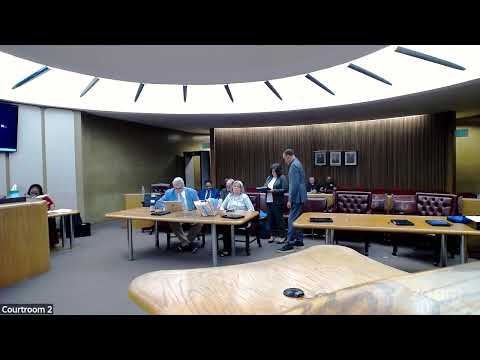
252nd District Court calendar: multiple pleas, probation revocations and monitoring orders
Loading...
Summary
The 252nd District Court processed a busy docket of initial appearances, plea rejections, probation revocations and sentencings; the judge reset many cases for counsel, found several probation-violation counts true and imposed monitoring and custody conditions including ignition-interlock and SCRAM devices.
The 252nd District Court convened a morning docket to handle initial appearances, arraignments, motions to revoke and a string of plea and sentencing matters.
The judge opened by checking whether defendants who had posted bond had retained counsel and reset numerous matters roughly 30 days when attorneys had not yet filed appearances, warning that failure to show effort to hire counsel could lead to bond increases. Several defendants were specifically ordered to meet with at least three attorneys, bring the names of those attorneys to the next court date and provide retention paperwork if an attorney had been engaged.
Across the docket the court granted short resets to allow parties to complete discovery and to obtain medical or hospitalization documentation when needed. Where discovery remained outstanding, the judge ordered normal resets and directed counsel to file the necessary paperwork so cases could be set with accurate records.
The court received testimony from Sarah Simon of the Jefferson County Adult Probation Office about a supervisee's attendance and discharges from sex-offender treatment, missed polygraph obligations and a history of denying responsibility. After reviewing the probation officer’s testimony and an updated report, the judge found counts in a motion to revoke to be true, held that sufficient evidence supported a guilty finding for indecency with a child in that matter and explained the defendant’s exposure and appellate rights; the court handed the defendant trial-court certifications and a written admonishment concerning firearm-possession ineligibility under Texas law.
In multiple plea matters the court followed negotiated agreements. The judge accepted plea-related agreements for Jeron Crane and deferred proceedings, placing him on probation with specified program conditions (including participation in an ISF cognitive track and GED completion) and fines as part of the agreed disposition. Crane was given a limited scheduling accommodation to turn himself in later in the week because of a family childbirth, but the judge warned that failure to surrender on the new schedule would constitute a probation violation.
The court sentenced Thomas Valentino under a negotiated plea to 18 months in state jail (credit for time already served was acknowledged) and handled paperwork discrepancies before confirming the terms. For Correll Gilbert — who pleaded guilty to a DWI third-or-more offense — the court ordered continued use of an ignition-interlock device, imposed a SCRAM alcohol-monitoring device until completion of an intensive outpatient program (JCDI), and allowed the defendant to serve 10 days on weekends as part of the agreement, stressing that any violation could trigger the original 10-year exposure.
The court also accepted a guilty plea from Terrell Coker and placed him on three years’ deferred probation with a $300 fine, and it accepted a plea to a reduced class-A misdemeanor for Brandell Griffin and reset sentencing without a pre-sentence report to permit the defendant to prepare to serve a specified short county sentence. Jamaica August waived formal reading on a motion to revoke, pled true to the alleged violations (including an alleged positive drug patch and other counts), and the court revoked probation and sentenced her to eight months in Jefferson County Jail under Section 12.44 of the penal code, with credit for time served; the court again provided the trial-court certification and admonished her about firearm-possession ineligibility.
Throughout the calendar the judge repeatedly told defendants to keep in contact with their bondsmen and appointed counsel where provided, and to report to probation and related offices for paperwork and testing. When monitoring or treatment was ordered — for example polygraph requirements, the ISF program, GED completion, ignition-interlock devices and SCRAM monitors — the court emphasized that successful completion of those conditions could avoid activation of greater prison exposures tied to the underlying indictments.
The court continued to reset many matters for short windows to let counsel and the state complete discovery and for probation and pre-sentence reports to be prepared where required. No omnibus changes of law or new local policies were announced at the hearing; the day’s proceedings were a mixture of routine docket management and a set of contested probation matters that resulted in both rehabilitative conditions and custodial sentences.