Act 20 screener data shows statewide literacy challenges; New Berlin outperforms demographic prediction
Loading...
Summary
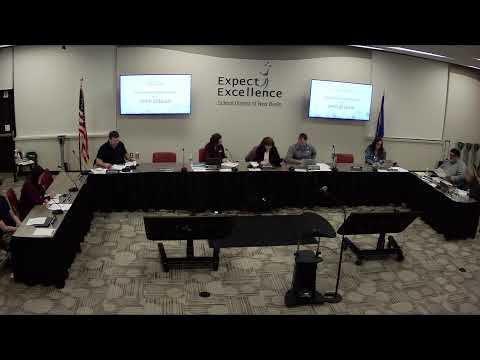
A researcher presenting Act 20 screener data told the New Berlin School Board that more than one-third of Wisconsin students fell below the early-literacy threshold at least once, but the School District of New Berlin performed substantially better than demographic models predicted.
Will Flanders, research director at the Wisconsin Institute for Law and Liberty, told the School District of New Berlin board that the new statewide literacy screeners required under Act 20 show widespread early-literacy concerns while revealing notable district variation. "If you look statewide across the board, over a third of students at least once fell below" the designated percentile, Flanders said, a level that would trigger mandatory intervention.
Flanders explained the screeners were administered midyear and in spring for the first year and that future years will include three screeners annually. He said his analysis focuses on students who fell below the threshold at least once, and he cautioned the new test's reliability and small-district sample sizes can produce large swings between kindergarten and third-grade results.
The research used a demographic-adjusted regression to compare predicted outcomes (given a district's poverty, disability and other characteristics) to observed outcomes. Flanders said disability rates and low-income percentages were the strongest predictors of students scoring below the threshold; poverty, he said, remains "the biggest driver of student outcomes in the United States." Even after adjusting for those factors, he said, some districts—citing Cudahy as an example—exceeded expectations, suggesting local practices can make a difference.
On county and local results, Flanders said New Berlin "performed the highest compared to its prediction in the county" and ranked 21st among K–12 districts statewide, with roughly 13% of students observed below the threshold compared with about 30% predicted by the model. He highlighted small increases in New Berlin's English-language-learner share (from about 2% to over 3.5% in four years) and a rise in students identified with disabilities (from about 9% in 2021 to 11% currently) as demographic trends that make the district's relative performance notable.
Board members asked follow-up questions and Flanders offered his contact information for further discussion. The presentation closed with a board thanks and no formal action on the data itself.
The board heard the presentation at a March work session; administrators said the district and schools will continue to review the screener data as they plan interventions and monitor progress.