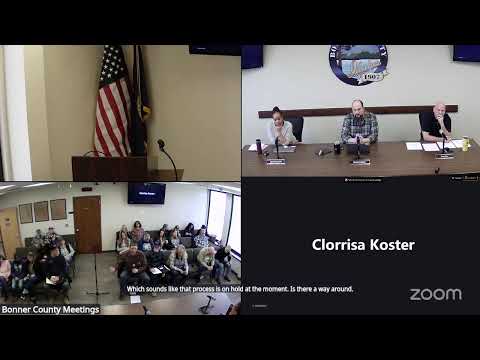
Bonner County meeting raises questions about who pays the fair bookkeeper and how large fair funds are overseen
Loading...
Summary
Commissioners and Fair Board members on March 23 discussed whether the fair's bookkeeper is a county employee or contractor, who should pay the position, banking oversight for a fair account said to hold hundreds of thousands of dollars at times, and shortfalls in fair revenue.
Bonner County commissioners and Fair Board members spent much of a March 23 special meeting detailing how the fair handles pay and accounting and exploring changes to improve fiscal oversight.
The Fair Board has used a contracted outside bookkeeper to manage finances, but a recent county legal opinion states the Fair Board secretary, manager and treasurer are county employees. That raised practical and legal questions: if the treasurer/bookkeeper is a county employee, does the county pay the salary and does that change the contractor’s access to county legal advice?
"If the legal opinion says that the role of the treasurer... is an employee, they would get access to more of what the county does versus the current way we've been operating," said a BOCC participant (speaker 2), summarizing concerns about access to counsel and the risk of reclassifying a contractor as an employee.
Nate Adams of the Bonner County Prosecutor’s Office (speaker 6) said counties may employ people in different ways — as salaried employees or as contractors providing services for the county — and that specific pay and benefits would need BOCC approval if the county were to convert a contract into an employee position. "Typically, it would be a Bonner County payment," Adams said when asked who would cover a bookkeeper’s salary if treated as county personnel.
Participants also discussed past pay and budget history. The transcript references different past monthly amounts for the bookkeeper role (figures cited in the meeting include $1,250, a transcript line that reads $12.50, and a later reference to $5,000); speakers said the BOCC had approved dollar amounts while the Fair Board conducted hiring and contract changes. Because those figures were inconsistent in the record, commissioners asked for formal clarification from legal and finance staff rather than drawing immediate conclusions.
Fair Board and BOCC members also discussed the fair’s bank account and oversight. One participant (speaker 5) said the fair’s account balance can be "3 to $400,000 at times." Adams recommended that the county comptroller supervise county‑owned accounts and that fair accounting be presented to the BOCC for oversight and statutory reporting, typically through quarterly reports aligned with the 90‑day statutory requirements.
No motions or votes occurred during the special meeting. Commissioners directed staff to provide the Eide Bailey opinion and to clarify how contractor versus employee classifications affect access to legal counsel and budget authority. Attendees emphasized improved quarterly reporting, clearer job definitions, and better public communication about projects and cash handling as next steps.