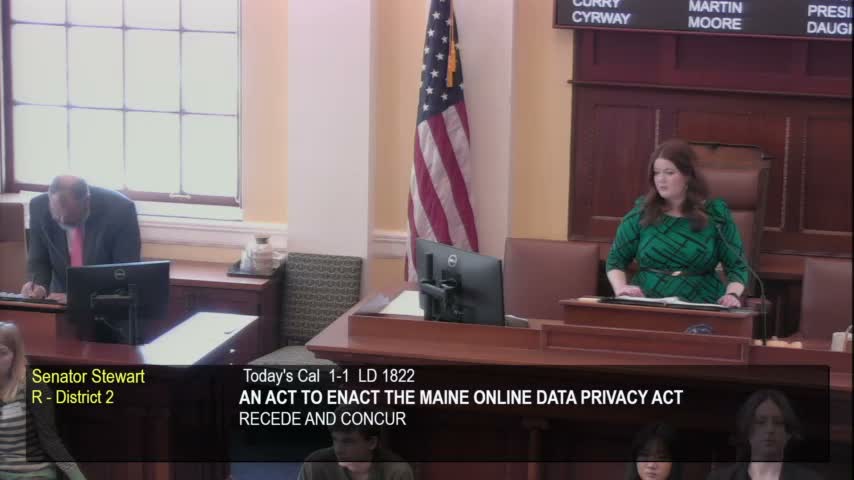
Senate debate over Maine Online Data Privacy Act fails to kill bill; indefinite postponement motion loses
Loading...
Summary
Lawmakers debated LD 18-22, a bill to limit certain data broker practices; business groups warned it would disadvantage small Maine firms while supporters said it protects consumers and children. A motion to indefinitely postpone the bill failed 14–19 on a roll-call vote.
Senators spent more than an hour debating LD 18-22, the proposed Maine Online Data Privacy Act, as the Senate rejected a motion to indefinitely postpone the measure.
Sen. Stewart, who moved the indefinite postponement, argued that the version now before the body — including changes negotiated with the other chamber — remained “insufficient” and would harm Maine businesses. “This particular version is still insufficient to be considered a good piece of public policy,” Stewart said, urging colleagues to kill the bill rather than attempt to repair it at the end of the session.
Opponents of postponement cited a letter circulated by the Maine State Chamber of Commerce and more than 150 executives, which warned lawmakers that “by severely limiting the data that underpins modern digital marketing, the bill will increase costs, reduce effectiveness, and make it harder for businesses in Maine to reach customers and grow.” Sen. Garren drew attention to small-business examples and local chambers that had signed on to the opposition.
Supporters countered that the bill’s goal is to curb practices by data brokers who collect and sell highly sensitive personal information. “Right now, data brokers have too much of our deeply personal data, and there’s no way for us to opt out of that,” Sen. Tipping said, adding the measure specifically targets collection practices that can include children and health information. Sen. Carney cited reporting that large platforms profit from targeted and fraudulent ads and argued stronger limits protect consumers.
After debate, the Senate recorded 14 votes in favor of indefinite postponement and 19 opposed; the motion failed. Senators then pursued additional procedural motions about how and when to take up the bill again, but the day’s roll call did not indefinitely kill LD 18-22.
Next steps: The bill remains pending on the Senate calendar; senators indicated additional amendments and negotiations could follow as the session proceeds.