Get Full Government Meeting Transcripts, Videos, & Alerts Forever!
Get email alerts on the Municipal Budget topic
No spam. Unsubscribe anytime.
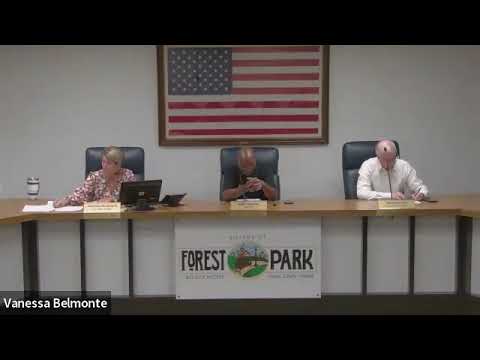
Commissioner Maxim warns of $15 million Forest Park deficit, urges new revenue and development
Summary
Commissioner Maxim told the Village of Forest Park council that the village carries an overall $15 million deficit and urged the body to pursue new revenue sources — including reconsidering a 'places of eating' tax and stalled zoning changes — to restore fiscal stability.
Commissioner Maxim told the Village of Forest Park council on Aug. 11 that the village is carrying a $15 million overall deficit and urged the body to pursue new revenue sources to close the shortfall. "We are carrying a $15,000,000 overall deficit... and the most urgent part of that is over $6,000,000 in our general fund alone," Maxim said, calling the situation "not sustainable."
Maxim said roughly $2,000,000 of that shortfall was borrowed from the village's TIF fund and warned the council that money taken from restricted funds will need to be paid back. "That's a $2,000,000 that we need to pay back to that fund someday, and we don't have a plan in place to do that," he said.
The commissioner urged the council to consider revenue measures and development that would increase the village's tax base, singling out a previously discussed "places of eating" tax as an option the council had declined to pursue. "We didn't even negotiate... What about three quarters of a percent?" he said, adding that staff and planning commissions had vetted zoning code changes that could have supported development but were rejected by the council majority.
Commissioner Nero replied that he shared the desire to move revenue items forward but favored a measured, analytical approach. "We need to constantly put pressure on those action items and make sure that they're moving forward," Nero said, noting the need to balance urgency with careful implementation.
Maxim framed the debate as a question of priorities. He said rising expenses — which he described as increasing faster than revenues since 2022 — mean the council must weigh whether actions move the village toward financial stability. He asked residents and local business owners to suggest ideas and urged council members to consider all options.
Why it matters: The council's budget choices will affect services, capital investments and possible future tax proposals. Maxim said the village must either identify new revenue streams or curb spending on high-cost needs such as a replacement fire engine and other capital items.
Next steps: The council did not adopt any new revenue ordinance at the Aug. 11 meeting; commissioners discussed continuing policy work with village staff and existing committees to develop options before future votes.