Get Full Government Meeting Transcripts, Videos, & Alerts Forever!
Get email alerts on the Rental Registration topic
No spam. Unsubscribe anytime.
Brookfield continues debate over proposed rental-registration ordinance as landlords press for data and cost clarity
Summary
Village staff presented three options for a rental-registration ordinance—ranging from a $50 annual per-building registration to full inspections and interior unit sampling—while landlords and residents urged more local data, cost analysis, and protections for tenant privacy; trustees deferred action and requested further information.
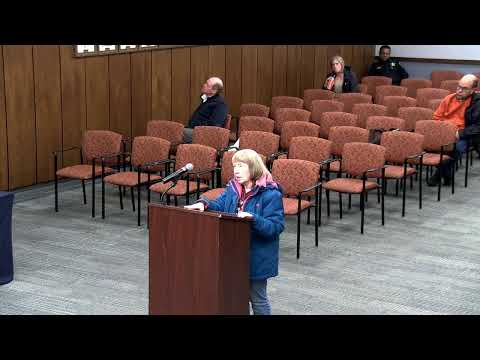
Village of Brookfield officials continued a months-long discussion about a proposed rental-registration ordinance at a Committee of the Whole meeting on Monday, Nov. 10, as staff laid out three possible approaches and dozens of landlords and residents urged the board to slow down and produce more local evidence and cost estimates.
Community development director Libby Popovic presented three options: (1) a basic annual registration to collect current ownership and contact details with a staff-estimated administrative fee of $50 per building; (2) registration plus exterior and common-area inspections on a three-year cycle with a higher administrative fee and inspection charges; and (3) a staff-recommended full program combining exterior/common-area inspections and interior unit sampling on a three-year rotation, modeled on practices in nearby Riverside and Oak Park. Popovic told trustees that relying solely on assessor or water-billing records does not reliably establish legal ownership for notices because recorded deeds, tax-bill addresses and assessor rolls can differ, and some owners are entities registered in other states. "When you pull up a tax bill, you can put anyone on the tax bill," she said, noting that cross-checking recorder, treasurer and secretary of state records is often required to find the right legal owner.
The public-comment period drew numerous landlords and property owners who opposed the staff recommendation and pressed for more data on local safety problems and how frequently staff cannot locate owners. Lou Arzan, a housing provider, told the board: "Creating a new regulatory system without clear evidence of a public-safety need is not responsible governance." Several speakers — including Jason Horn, Bob Leeds, Andre Filippelli, "Lenny," and Barbara Dam — said the village has existing complaint-based enforcement and resale inspection processes and that the village has not presented clear local evidence that routine interior inspections or a broad registration program are needed.
Speakers raised practical and legal concerns: whether tenants must consent to interior access, whether the village would be prepared to seek warrants when entry is refused, and how the village would locate owners for mailed notices when ownership is held by out-of-state entities or LLCs. Horn suggested collecting owner contact information at closing or deploying a better complaint-logging tool before implementing a new registration system. Several landlords argued fees and inspections would be burdensome for small-property owners and warned of scope creep and rising costs over time.
Trustees and staff agreed on at least one immediate point: the village needs better local data. Trustees asked staff to provide the number of tenant complaints, the number of dismissed adjudication cases tied to service issues or incorrect notice addresses, and more detail on the projected administrative burden and costs of each option. Popovic said staff does not currently have all that data readily extractable from existing files because records were not kept in a way that differentiates tenant calls from owner-initiated issues; she estimated the village has roughly 1,500 rental units (staff qualifier: units, not buildings) and said complaint volumes rise in colder months.
No ordinance was introduced or voted on at the meeting. President Garvey said the board would solicit additional written input, obtain further data from staff, consider Economic Development Commission recommendations (the EDC had signaled support for at least a registration requirement), and schedule further discussion at a meeting when all trustees could participate. The meeting adjourned into executive session to discuss personnel matters; the board held a roll-call vote to enter executive session, which passed with the trustees voting aye.
What’s next: Trustees asked staff to return with clearer local data on complaint volumes and adjudication outcomes, a more detailed cost analysis of each option (including estimated staff hours, third-party vendor costs and software licensing), and examples of measurable safety outcomes from nearby municipalities with inspection programs. The board left policy choices open and did not set a date for final action.