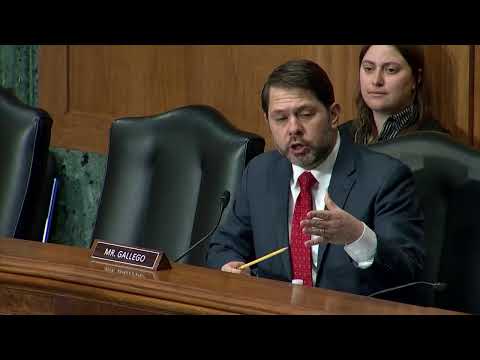
Senate hearing presses for swift EXIM reauthorization as bank seeks hiring flexibility and risk‑management relief
Loading...
Summary
Senate Banking Committee members urged quick reauthorization of the Export‑Import Bank to counter Chinese financing, expand small‑business export access and back long‑dated strategic projects; EXIM’s president requested restoring former risk‑management parameters and hiring authority to recruit sector experts.
Chairman Scott opened the Senate Committee on Banking, Housing, and Urban Affairs hearing by calling reauthorization of the Export‑Import Bank of the United States essential to keep American firms competitive with China and to support small businesses and manufacturing. "The bank gives American businesses the backing they need to compete in strategic sectors," he said, citing 68 South Carolina exporters that used EXIM services to support roughly $9 billion in exports.
EXIM President and Chairman Mister Jovanovich told senators the bank has a $71 billion active pipeline and that the current administration’s priorities are to expand market access, advance energy and critical‑mineral projects, strengthen supply‑chain security and support industries of the future. "For the first time in 10 years, I'm proud to say, EXIM is projected to fully repay its appropriation and return a profit," he said, and asked Congress to reauthorize the bank, adjust the default‑cap regime, and provide hiring flexibility for specialized staff.
Why it matters: Senators from both parties framed reauthorization as a market signal that reduces transaction delays and encourages long‑term investment. Lawmakers repeatedly cited China’s state‑backed export financing as a competitive threat; Senator Ricketts pointed to recent reports showing Chinese agencies provided substantially more medium‑ and long‑term financing in 2024 than U.S. peers. Several senators pressed EXIM to restore the risk‑management approach used for 81 years, arguing that current constraints discourage longer‑dated, strategic transactions.
EXIM also defended its small‑business focus. The agency said nearly 90% of its transactions support small and midsize enterprises and outlined plans to expand partnerships with community lenders and other government programs to broaden outreach. Senator Blunt Rochester and others said many eligible small exporters have not yet accessed EXIM tools.
The hearing produced no votes. Senators were allowed to submit questions for the record; the chair set a one‑week deadline for submissions and allotted 45 days for written responses. The committee recessed to allow members time to draft legislation for a multi‑year reauthorization.
The next procedural steps are reauthorization negotiations on Capitol Hill and follow‑up oversight: senators asked for more detailed briefings and term sheets on certain projects, including the critical‑minerals initiative known as Project Vault.