Get Full Government Meeting Transcripts, Videos, & Alerts Forever!
Get email alerts on the Education topic
No spam. Unsubscribe anytime.
Teachers and parents urge Belvidere council to oppose proposed Perry Elementary closure
Summary
Two public commenters, an ESL teacher and a Perry parent, asked the city council to press the school district to keep Perry Elementary open, raised concerns about a 400‑person survey paid by a development group and questioned the transparency of proposed public hearings and budget reallocation.
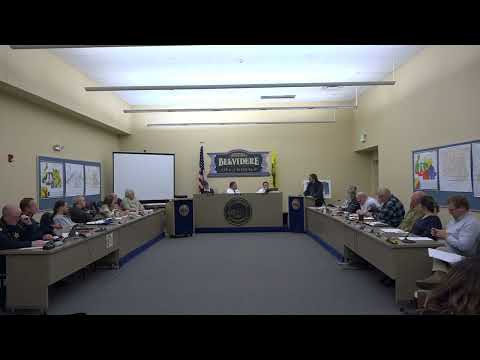
Two residents urged the Belvidere City Council on March 23 to press District 100 to keep Perry Elementary School open and to ensure neighborhood residents can participate in any closure hearings.
Fort Zachary, who identified himself as an ESL teacher at Perry Elementary, told the Committee of the Whole that the school is “worth saving” and said the district has been moving students out of Perry while deferring maintenance. Zachary told the council he was troubled that, he said, a half‑million dollars originally requested for Perry’s roof was spent on high‑school track and tennis courts. “Once you pull a neighborhood school out of a community, there is no getting it back,” he said.
Mike Speak, a Perry parent, questioned the reliability and independence of a district survey of 400 residents that he said the board is relying on to justify further action. Speak said the sample likely included many “empty nesters” and that the poll was paid for by “the same development group that stands to financially benefit” from a closure, raising concerns about bias. He also contested a $14,000,000 maintenance figure for Perry as inflated and noted that $7,000,000 had already been allocated in the district’s capital plan to address certain needs.
Both speakers urged the city to press the school board for more information and for hearings located in Perry’s attendance zone. Speak said public hearings the district scheduled would take place outside Perry’s neighborhood and that a vote would follow “immediately at the close of the last hearing,” a schedule he described as too compressed to allow meaningful local input.
Why it matters: Perry is presented by commenters as a neighborhood anchor—an on‑walking school and community meeting place—whose loss would remove local childcare and civic space and alter families’ routines. Both speakers asked the council to use its influence to request more transparent community engagement from the school board and to make sure any decisions reflect the views of households living in Perry’s zone.
What happens next: The speakers said the district has scheduled public hearings in two weeks and a vote afterward; the council did not take formal action on the school matter at this meeting.