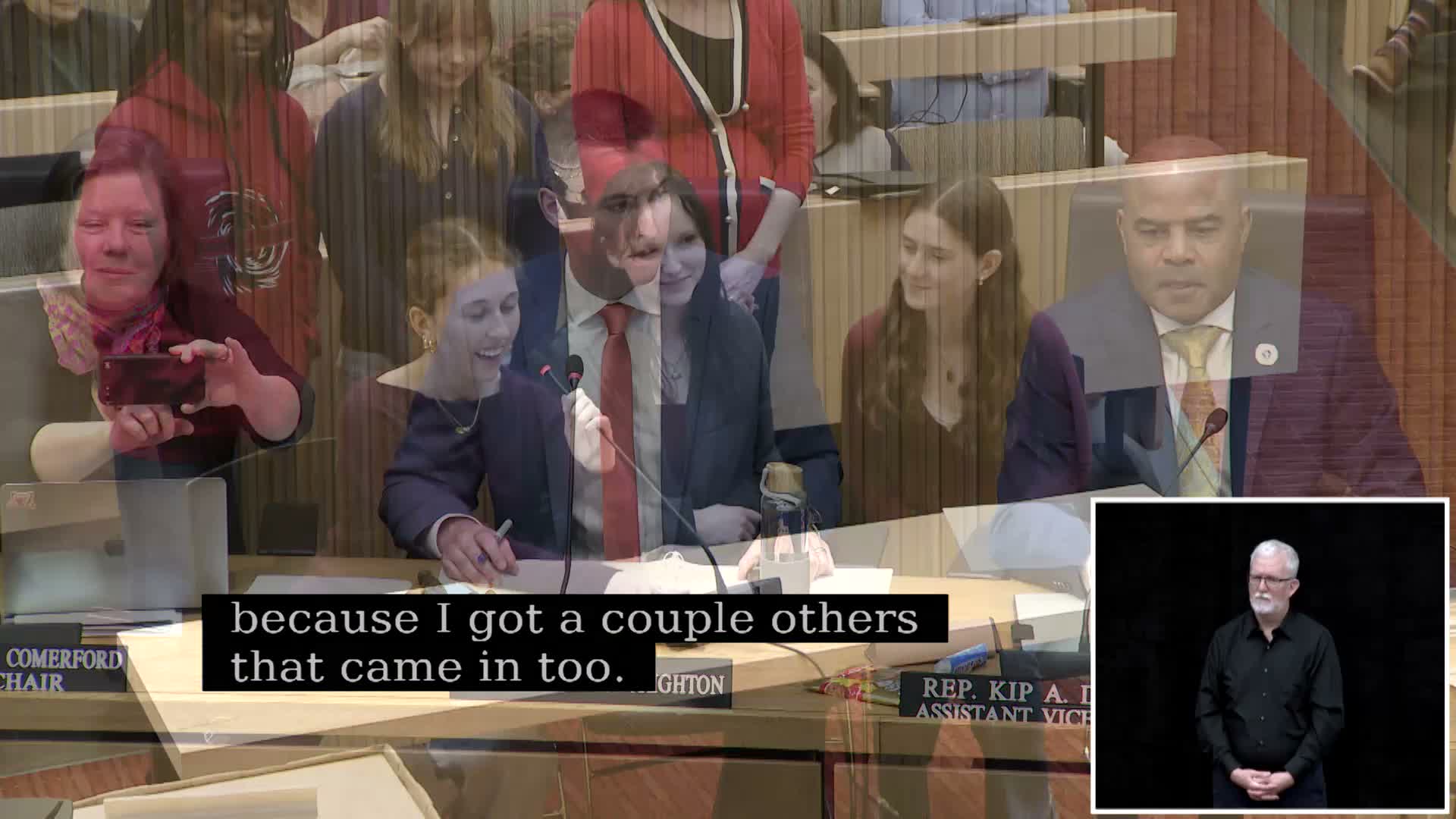
Students, educators and town leaders urge Ways and Means to fix school funding and fully fund rural aid
Loading...
Summary
Students, superintendents and town managers at a joint Ways and Means FY27 hearing pressed lawmakers to revise the Chapter 70/78 funding formulas and restore full rural aid—many asked for the $60 million recommended by the legislature's rural commission and cited multi‑million-dollar local deficits.
Sen. Bridal Crichton convened the Joint Committee on Ways and Means, and multiple panels of students, educators and municipal leaders testified that the state’s education funding formula is failing rural and regional districts, producing staff cuts and program eliminations.
Amherst Regional students told the committee their districts face large budget gaps. "We are facing a $1,000,000 deficit for the middle and high schools," said Ella Bradbury, a sophomore at Amherst Regional High School, who described teacher positions lost or reduced to part-time because of repeated cuts. Rose Collins, an eleventh grader, told lawmakers the district-level deficit across multiple towns could exceed $2,000,000 this year and warned of possible elementary-school closures and growing transportation costs.
Groton-Dunstable leaders provided district-level data underscoring those personal accounts. Superintendent Jeff Bruno said Chapter 70 funding has been essentially flat for 15 years while local net school spending increased by roughly $17 million since 2010, leaving 96.3% of recent growth to local taxpayers. Town Manager Mark Haddad told the committee Groton’s required local contribution rises by about $682,000 in FY27 while the governor’s proposal adds roughly $165,000 in state Chapter 78 aid — leaving an estimated $451,000 gap and an approximately $1.2 million shortfall to maintain current services.
"We are asking for fairness," Lacey McCabe, chair of the Groton-Dunstable Regional School Committee, said. McCabe repeated a district request for a sizable increase in the minimum per‑pupil aid and urged lawmakers to begin funding-formula reform while providing interim relief. Several speakers explicitly asked the legislature to restore or fully fund the $60 million in rural aid recommended by the legislative rural school commission.
Educators and school committee members described direct classroom effects: larger class sizes, eliminated electives and extracurriculars, fewer counselors and support staff, and rising special-education and transportation costs that strain local budgets. Teacher Danielle Seltzer said repeated cuts have produced a “death spiral” in rural districts as students and programs decline.
Committee members acknowledged the testimony but no formal votes or motions were recorded at the hearing. Lawmakers asked for additional written materials and data in several instances; the hearing remains part of the FY27 appropriation process. The committee’s next procedural steps depend on internal budget drafting and appropriation timelines.
Article provenance: topic begins with public student testimony and closes with Groton-Dunstable committee remarks. The reporting above is drawn from in-person testimony to the Joint Committee on Ways and Means during the FY27 budget hearing.