Get Full Government Meeting Transcripts, Videos, & Alerts Forever!
Get email alerts on the Green Belt Program topic
No spam. Unsubscribe anytime.
Jasper County adopts Green Belt program funded by transportation sales tax; conservation groups urge early spending and bonding
Summary
By voice vote the county council adopted a Green Belt ordinance implementing the 2024 transportation sales tax allocation. Conservation groups told council the program should use easements and fee simple purchases and consider bonding to act quickly on high-priority properties.
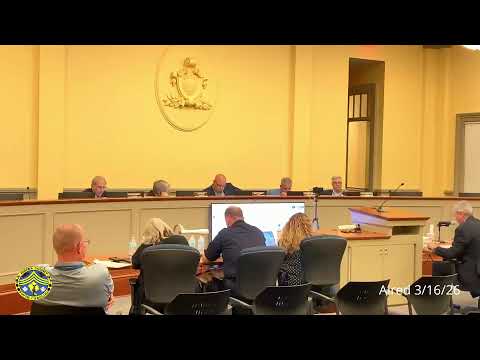
Jasper County on March 16 adopted an ordinance establishing a Green Belt program that will use 20% of the county’s transportation sales-tax proceeds for land protection and conservation programs.
County staff said the ordinance sets up an advisory committee, a ‘green belt bank’ (a separate accounting construct), a competitive application process, and the ability to hire third-party expertise to create scoring criteria and manage due diligence. Staff also noted existing bonding authority: the county has board approval to issue up to $150 million in bonds against sales-tax receipts to accelerate projects if council chooses to do so.
Conservation organizations and state agencies urged council to act quickly and use a mix of fee-simple purchases and conservation easements to maximize public benefit. Kate Schafer of the Lowcountry Land Trust told the council the program “delivers on that return and that promise to the voters” and emphasized voluntary, competitive grants that leverage other public and private funding. Taylor Raines of Open Land Trust and David Bishop of The Nature Conservancy described conservation easements as a tool that keeps land on the tax rolls while protecting habitat, water quality and rural character. Bishop said land values are rising and earlier action lowers the price of protection.
Councilors sought clarification on wetlands, buffers and how properties would be appraised and scored. Staff advised that the program will use an application-based scoring model and that the county’s GIS and consultant inputs will provide parcel-by-parcel prioritization. Council also discussed bonding, with staff noting the county already has bonding authority for $150 million and may choose when to issue bonds.
The ordinance passed on second reading after a public hearing with multiple conservation and state-agency speakers in favor. Council requested follow-up briefings on the scoring model and additional mapping details so members could see which high-priority areas would be eligible under the conservation-priority model.
What happens next: Staff will finalize consultant procurement and scoring criteria, publish the application process and return with detailed maps and answers about wetlands-credit treatment and bonding options.