Mass. hearing spotlights how federal 'OB3' and other federal changes could widen the racial wealth gap
Loading...
Summary
Lawmakers heard unified testimony that recent federal tax and safety‑net changes (referred to as OB3) disproportionately benefit wealthier households while reducing supports that protect low‑wealth Black and Latino families; witnesses urged state countermeasures such as targeted assistance and stronger data.
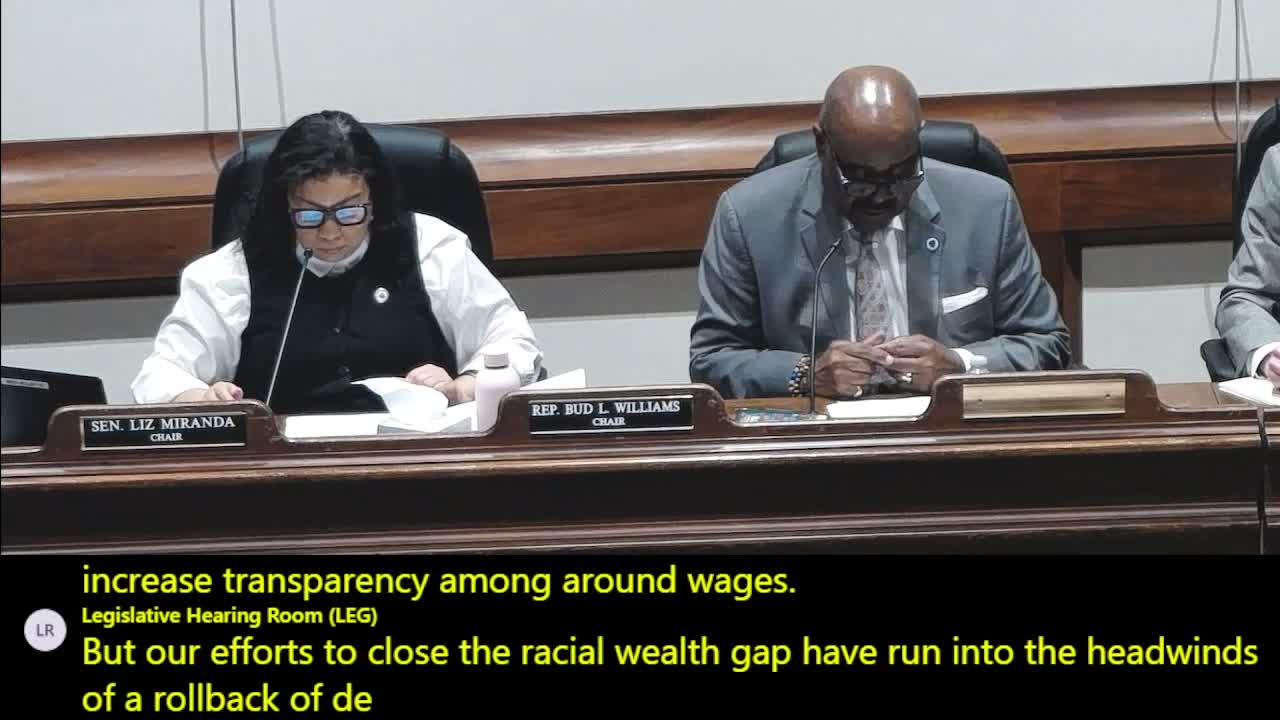
The Joint Committee on Racial Equity, Civil Rights, and Inclusion convened in Boston to hear nearly five hours of testimony about how recent federal policy changes are affecting the racial wealth gap in Massachusetts.
Senate Chair Liz Miranda opened the hearing by calling out stark disparities in household net worth and stressing the session would focus on the role federal policy plays in creating those differences. "We are living in a time of historic wealth inequality," Miranda said, noting national and Greater Boston statistics showing wide gaps in assets between white households and Black and Latino households.
State officials from the Healy‑Driscoll administration described efforts to blunt federal headwinds. "Massachusetts is committed to building a strong workforce and a workforce that reflects the vast representation of our communities," said Lauren Jones, Secretary of Labor and Workforce Development, pointing to ESOL for work funding and workforce grant programs. Secretary Kiami Mahonya of Health and Human Services emphasized health as a driver of wealth, warning that reductions in Medicaid access and medical‑debt protections "are likely to widen racial wealth and health gaps, especially in high‑cost states like Massachusetts." Assistant Secretary Juan Vega (Executive Office of Economic Development) highlighted technical assistance grants, a "business front door" navigation hub and budget requests to sustain community investment.
Researchers and advocates pressed for concrete state action. Dr. Jeffrey (Federal Reserve / Brookings‑affiliated) recommended immediate wealth‑building measures such as down‑payment assistance at scale and baby‑bonds, arguing that equalizing earnings and education alone would take generations. Kim Goulart of Boston Indicators and other witnesses raised concerns about OB3’s design: it extends tax benefits concentrated among the wealthy while adding work requirements and eligibility changes to programs such as Medicaid and SNAP. "Taken as a whole, OB3 largely benefits those who hold substantial assets already," Goulart said, urging automatic enrollment and broader eligibility in any child savings pilot.
Witnesses offered policy options for the Commonwealth — expanded down‑payment assistance, targeted business supports for micro and minority firms, strengthened supplier‑diversity follow‑through (not just certification), protections for community health centers, and state fiscal measures to maintain services if federal funding declines. Viviana Abreu Hernandez of the Massachusetts Budget and Policy Center urged preserving progressive revenue sources (including the estate tax and the fair‑share surtax) and warned that federal cuts could force painful state tradeoffs.
The committee closed by inviting additional written testimony and data; members said they will use the hearing record to inform potential state budget and policy responses.
The committee adjourned without a vote; written testimony is due April 7 per the hearing notice.