Get Full Government Meeting Transcripts, Videos, & Alerts Forever!
Get email alerts on the Downtown Revitalization topic
No spam. Unsubscribe anytime.
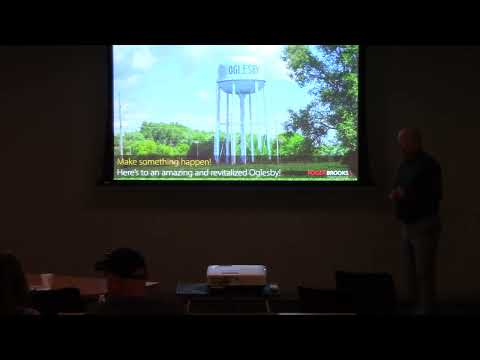
Presenter pitches 'adventure center' and low-cost downtown fixes to revive Oglesby
Summary
A consultant-style presenter urged Oglesby officials to prioritize downtown improvements, create an "adventure center" visitor hub and program a plaza to attract tourists and locals; city officials and residents raised questions about first-floor housing, sidewalk alcohol rules and dogs during a Q&A. No formal votes were taken.
A presenter at a public meeting in Oglesby recommended a series of low-cost, quick-start steps and a new "adventure center" to revive the town’s downtown and capture regional tourism dollars.
The presenter said many existing downtown buildings could be repurposed as business incubators and galleries with modest investment and cited broadband-equipped shared workspaces as successful examples. "The sole focus of every elected official ... is to improve the quality of life of the citizens," the presenter said, arguing downtowns act as the community's "third place" and help retain and recruit residents.
Why it matters: The presenter told attendees that the state already funnels substantial visitor traffic into the region — "3 and a half million people a year" — and that Oglesby could capture a small share by creating a programmed plaza and an adventure or visitor center to tie together parks and outdoor assets. The presenter used Wisconsin Dells as an example of a small town that leveraged marketing (he said the Dells’ annual marketing budget is about $13,000,000) to build a destination, and urged coordinated highway signage and state tourism partnerships.
Details and proposals: The presenter recommended: - Building an "adventure center" or visitor hub that can act as an experience-based business incubator and coordination point for park visitors; interior remodels, he said, could be supported by grants. - Programming a central plaza during peak hours (he identified 4 p.m. to 9 p.m.) with rotating activities on a two-week cadence and affordable street furniture (he cited benches around "$79"). - Allowing upstairs residential while discouraging first-floor housing in the core retail blocks, to preserve storefront activity. - Permitting beer and wine in fenced sidewalk cafes while keeping hard liquor indoors, and adding dog-friendly amenities such as scooper bags and water dishes.
Questions and pushback: During a public Q&A, residents asked whether the presenter had consulted local businesses; he said the visit was not a public-input process but rather an assessment and "conversation starter." A city official praised the presentation, recommended better signage (including to boat landings) and asked if the consultant had reviewed the Seneca Square plan. A tourism volunteer said hikers often look for dinner and evening options and urged downtown businesses to keep later hours to capture that market.
What the meeting did not do: There were no motions, votes or formal commitments recorded in the transcript. The presenter repeatedly framed ideas as suggestions rather than mandates and advised the city to pursue public engagement before implementing specific policies.
Next steps: The presenter closed by urging the creation of a destination team of volunteers to coordinate marketing and outreach and to pursue low-cost "low-hanging fruit" projects first. The meeting included several audience questions but ended with no formal decisions or assigned follow-up dates.