Get Full Government Meeting Transcripts, Videos, & Alerts Forever!
Get email alerts on the Local Infrastructure topic
No spam. Unsubscribe anytime.
Councilor outlines street repaving, intersection upgrades, refuse-fee options and post-blizzard reforms
Summary
Councilor Jeff Thompson reviewed near-term paving priorities (streets with PCI under 20), upcoming intersection projects, a contract-driven refuse-fee choice between larger barrels or higher special-item fees, and post-Hernando blizzard changes including fleet investments and earlier travel bans after the city spent roughly $1.3 million responding to the storm.
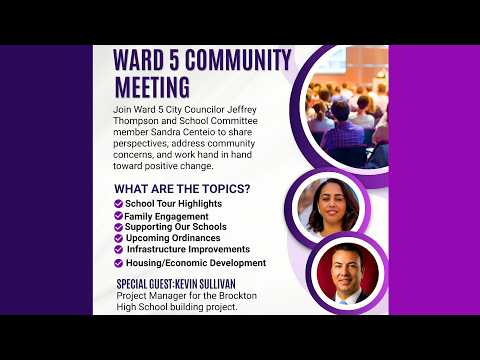
Jeff Thompson spent the second half of the Ward 5 meeting reviewing a range of infrastructure and public-safety items and asking for resident input on trade-offs.
Paving and street priorities: Thompson said the city prioritizes streets with a Pavement Condition Index (PCI) under 20 and named immediate target streets including Ida Ave (PCI 11), parts of Pinehurst and sections of Thatcher Street. He noted Chapter 90 funds can be used for public streets but not private streets and described the two-step process for accepting and fixing private ways.
Intersection and ADA upgrades: Thompson said crews will soon begin work to widen and reconfigure the Center Street/North Cary/Wyman Street intersection with dedicated left-turn lanes, improved crosswalks, new street lights and smart signals programmed to prioritize emergency vehicles. He said construction activity would begin within weeks and that a larger Center/Commercial Street rework is planned for 2027.
Refuse contract options: The city is considering raising quarterly refuse fees from $90 to $130 to provide 64-gallon trash barrels or increasing fees to $115 with higher special-item disposal charges (for mattresses, TVs and excess paint). Thompson polled the room informally on resident preferences; several residents favored larger barrels and better collection of bulky items left at the curb.
Blizzard response and reforms: Thompson reviewed the city's response to a record snowfall event (reported as 31 inches), noting the city deployed fewer contractor trucks than in prior storms, sought assistance from MassDOT and the National Guard, and incurred about $1.3 million in storm costs. Planned reforms include investing in larger in-house equipment, hiring contractors earlier in the season, stronger GPS tracking and earlier travel bans.
Anti-encampment and outreach: Thompson described the council’s override of a mayoral veto on an anti-encampment ordinance and said the city is deploying settlement-funded outreach — a police-led team with navigators and treatment staff — to offer services and to remove encampments on public property when needed.
Why it matters: The decisions affect immediate neighborhood quality (potholes, curbside bulky waste), emergency response times and long-term infrastructure budgets. Residents asked for clarity on schedules and costs; Thompson promised to publish schedules and continue outreach.
Next steps: Thompson said construction timetables and contract details will be posted when available, and the city will proceed with hiring for outreach positions and with planned infrastructure projects.