Get Full Government Meeting Transcripts, Videos, & Alerts Forever!
Get email alerts on the Commuter Parking topic
No spam. Unsubscribe anytime.
Brookfield staff proposes permit price increases, zone pricing and unified commuter-hour rules; board schedules follow-up
Summary
Village staff proposed higher monthly/quarterly permit fees at high-demand stations, zone-based/residency pricing through the Passport system, reclassification of some downtown commuter lots to shorter-term parking, and unifying commuter-hour windows; trustees debated trade-offs and agreed to revisit the item Jan. 12, 2026.
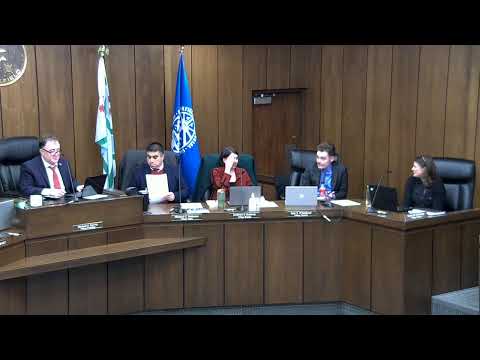
Village staff presented a set of proposed amendments to Brookfield’s commuter-parking ordinance at the Committee of the Whole on Dec. 8, outlining fee changes, lot reclassification options, and a plan to use a parking management platform to enforce zones and residency.
"Our recommendation would be monthly $55 for residents and $65 for nonresidents at Congress Park and Hollywood," said Noah Reif, the village’s management analyst, describing a proposal to use demand-based pricing that treats high-utilization stations as premium zones. Staff proposed the downtown station remain at a lower rate ($45 resident/$55 nonresident in the draft shown to the board).
Why it matters: Staff told trustees that permit sales have decreased from pre-COVID norms and that daily and monthly purchasing patterns have changed; the village’s data (2024) show roughly 238 monthly and 255 quarterly permits village-wide but do not indicate which stations purchasers use. That data gap complicates station-by-station pricing decisions, trustees and staff said.
Key proposals discussed by staff and trustees included: - Zone-based pricing and residency verification in the Passport permit platform so higher-demand stations (Congress Park, Hollywood) can carry higher nonresident fees while residents pay a lower rate. - Adjusting permit categories and parking classification around downtown: Option 1 would keep existing monthly/quarterly designations; Option 2 would remove monthly/quarterly from Lot 1 (near the Triangle site) and convert that stretch to short-term (2-hour by default, with trustees debating 3–4 hours) to better serve shoppers and restaurants. - Reclassifying parts of Hollywood station’s business-decal area to 2-hour or 15-minute spaces to improve customer access to small businesses. - Unifying commuter-parking hours across streets (staff recommended aligning current disparate windows to 5:30 a.m.–11 a.m.) so midday spaces free up for business customers.
Trustees raised practical concerns: several said Hollywood’s lots appear heavily used by Riverside-Brookfield students and cautioned against policies that would impose extra costs on students; others pressed staff to avoid creating confusing multi-zone rules for residents and suggested clear point-of-sale information (maps/QR codes) to show where each permit is valid.
Staff also contrasted daily and monthly usage at Congress Park: the daily lot behind Village Hall has 58 spaces with an observed average of 39 users and a peak of 81, while a 23-space north-side lot sees about 90–100 cars per week. Development at the Moose Lodge site could displace daily parkers; staff said the village needs options for relocation and reclassification.
The board did not adopt ordinance changes at the meeting. President Garvey asked staff to continue analysis, gather public input and return recommended ordinance language and implementation steps at a future meeting; trustees agreed to bring the topic back at the Jan. 12 village board meeting or continue to vet via a smaller subcommittee.
Separately, the board voted unanimously (roll call recorded as all 'Aye') to go into executive session at 9:57 p.m. under the Open Meetings Act to discuss setting a price for sale or lease of public property.
"We can build a system in Passport that allows applicants to submit proof of residency and staff can approve," Reif said, summarizing how enforcement and residency checks could work under a zoned permit system.